
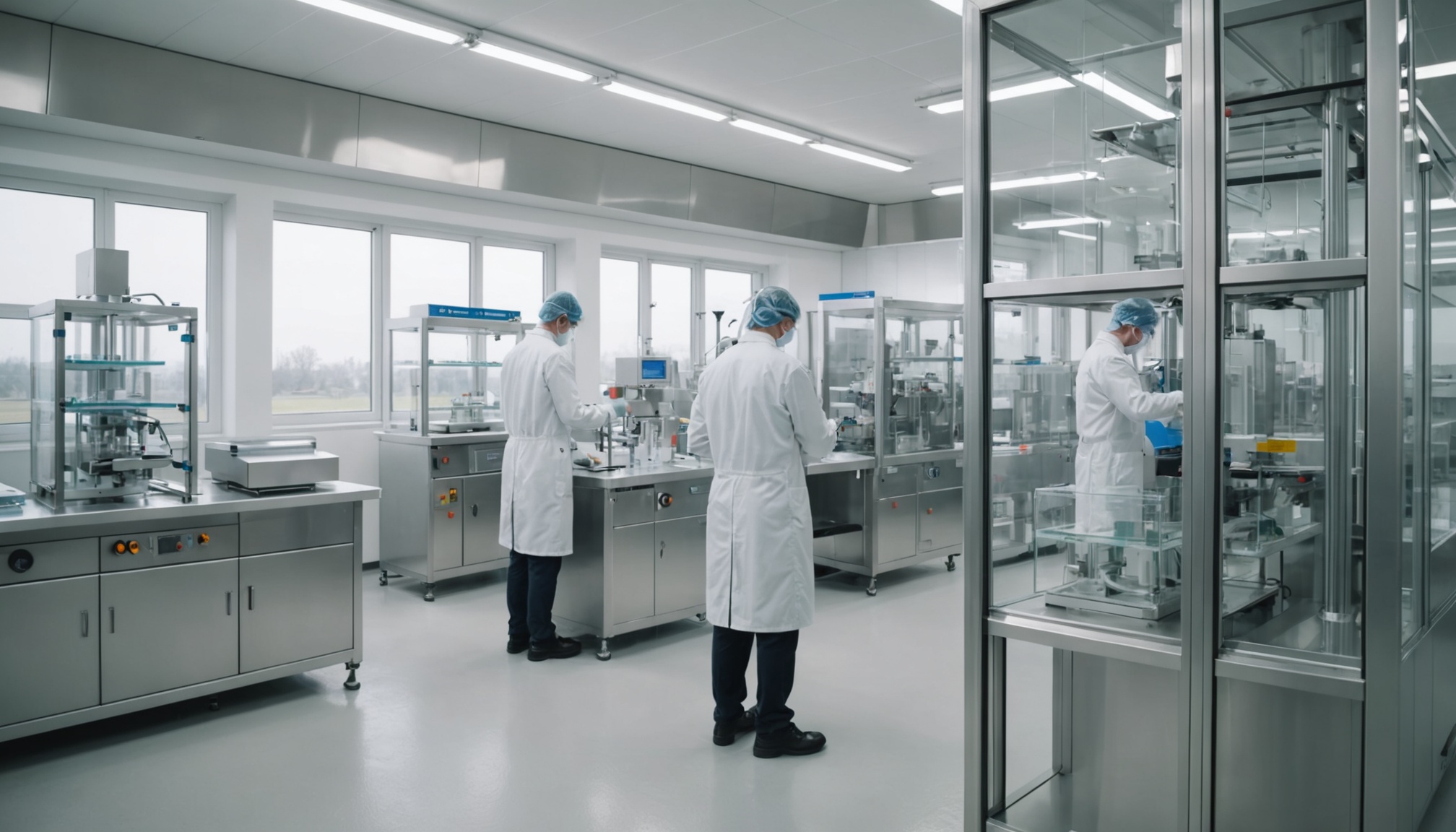
Announced Monday, June 22, 2026, at the Auxerre site of pharmaceutical subcontractor Galien, the reshoring of colchicine production to France marks a turning point for the 600,000 patients who depend on this treatment for gout. Previously manufactured abroad, this essential molecule will now be produced in the Bourgogne-Franche-Comté region, at a rate of 3 million boxes per year. Here's a breakdown of what this announcement actually changes, along with the key figures to remember.
A low-profile molecule with no equivalent
Colchicine 1 mg is hardly a household medication, yet it is considered one of the treatments deemed essential by French health authorities. Primarily indicated for managing gout flare-ups, it is also used for familial Mediterranean fever and Behçet's disease, two rarer but severe conditions.
What makes it unique: no substitute treatment covers the full range of its indications. That's why its supply shortages, already seen several times in recent years across Europe, worry both patients and health professionals. The drug was no longer manufactured anywhere in Europe before this announcement, with Mayoly—the French laboratory holding the marketing authorization in France—relying until now on production sites located notably in Romania.
Three million boxes a year in Auxerre
The new production line set up at Galien's Auxerre plant aims to cover the entirety of French demand and build in a margin for export. The first commercial batches aren't expected before mid-2027, once quality controls and regulatory approvals have been finalized.
- 3 million boxes of colchicine to be produced each year, once at full capacity.
- 3 million euros in industrial investment, including 2.5 million euros funded by Mayoly and 500,000 euros by Galien.
- A site already specialized in highly active pharmaceutical ingredients, which explains why Auxerre was chosen.
- A gradual ramp-up planned starting in 2027, with no disruption to current supply.
Why it matters: the question of pharmaceutical sovereignty
Beyond gout treatment, this case illustrates France's broader strategy of reshoring the production of medicines of major therapeutic interest. France's dependence on production chains outside Europe has regularly been flagged as a source of vulnerability, particularly since the supply crises of the past decade. Reshoring colchicine production means securing an irreplaceable treatment against geopolitical, logistical, and health-related risks.
France's Ministry of Industry has emphasized that this project is part of a broader list of strategic medicines whose production must be consolidated on French soil. For players in the pharmaceutical industry, it's a signal: manufacturing in France remains more costly—roughly twice as expensive as in other European countries—but the public policy calculus is shifting in favor of supply security.
What this actually changes for patients
For the 600,000 people being treated for gout in France, the immediate effect will be none: the boxes currently in circulation will keep coming from existing production sites. Starting in 2027, however, supply continuity should become more robust, with a single manufacturer on French soil and shorter logistics chains.
The retail price, meanwhile, is governed by France's regulation of reimbursed medicines. The added cost of French production—borne by the manufacturer—should therefore not be passed on directly to patients' prescriptions. In the medium term, the real question will be the economic viability of the production line, in a market where colchicine remains a very low-margin drug.
Frequently Asked Questions
What is colchicine used for?
It's a standard treatment for gout flare-ups, as well as for familial Mediterranean fever and Behçet's disease. It works by reducing the inflammation caused by urate crystals in the joints.
When will boxes produced in Auxerre reach pharmacies?
The first commercial deliveries are expected at the earliest by mid-2027. Until then, supply will continue to be ensured by current production outside France.
Why is this called a “strategic” medicine?
Because it is considered one of the irreplaceable treatments, and its availability directly affects the health of hundreds of thousands of patients in France. A lasting shortage would have no simple therapeutic alternative.
Sources
- L'Usine Nouvelle — Mayoly and Galien reshore colchicine production to Auxerre
- France 3 Bourgogne — Colchicine to be produced in Auxerre
- info-beaune.com — €2.5 million invested to reshore colchicine production in Bourgogne-Franche-Comté
This article was written with the help of artificial intelligence. Editorial policy