
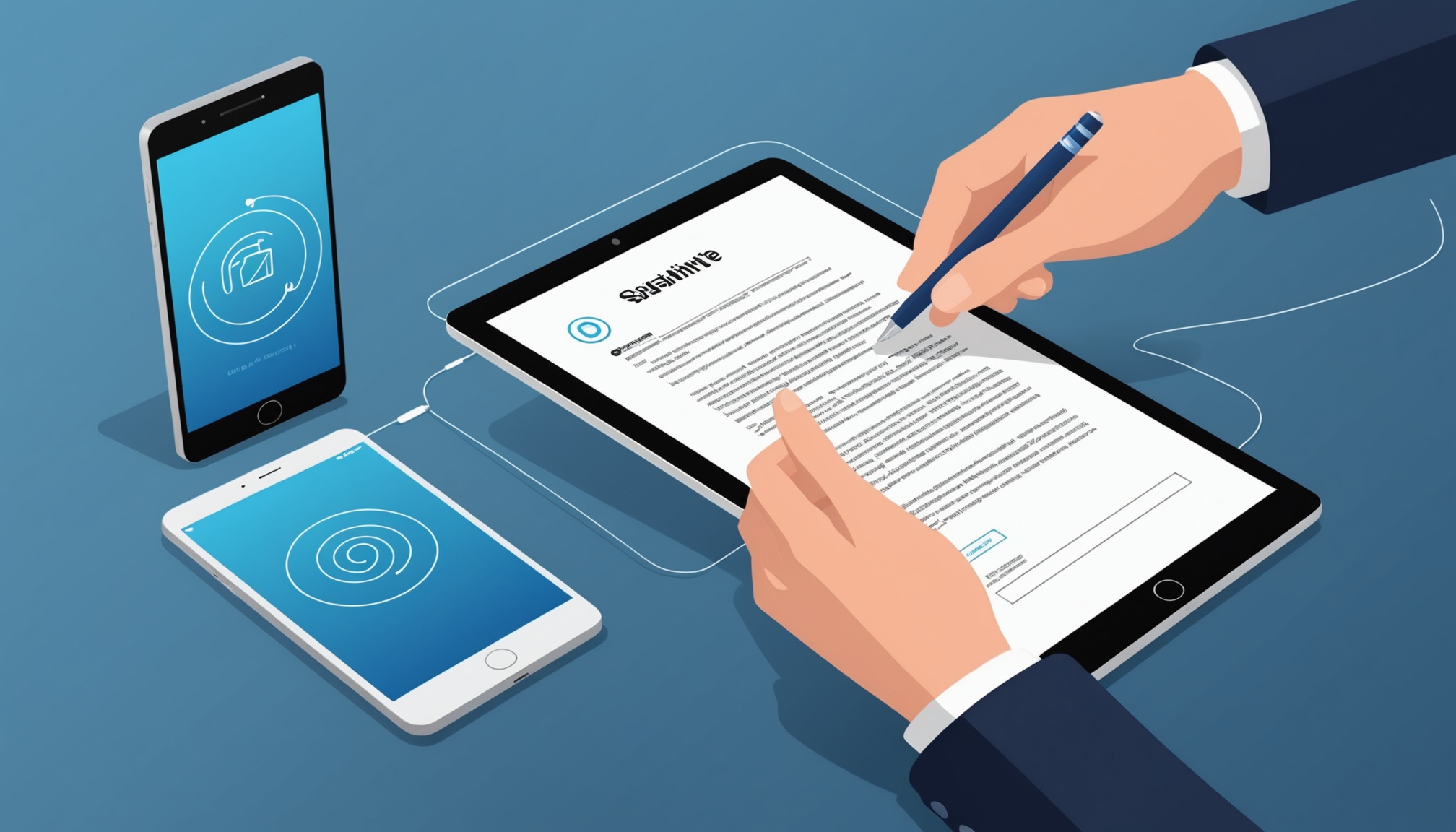
Employment contracts, quotes, commercial leases, terms and conditions: more and more business documents today are signed without paper or a pen. The electronic signature makes it possible to validate an agreement remotely, in just a few clicks, while retaining recognized legal value — provided the right security level and the right provider are chosen.
A Genuine Legal Value, but a Regulated One
In France, Article 1367 of the Civil Code grants an electronic signature the same evidentiary value as a handwritten signature, provided the process used reliably guarantees the signer's identity and the integrity of the signed document. The European eIDAS regulation clarifies this presumption by distinguishing three levels: simple signature, advanced signature, and qualified signature. For a company looking for reliable electronic signature, the choice of level depends above all on the stakes involved in the document being signed.
Three Levels, Three Uses
A simple signature relies on a code received by email or text message: it is suitable for low-stakes documents, such as a quote or an invoice. An advanced signature relies on more thorough identity verification and a personal certificate; it is recommended for contracts with significant financial stakes, such as a service agreement or a commercial lease. A qualified signature, finally, requires a certificate issued by an accredited certification authority and strict identity verification: it is the only one that benefits from a presumption of reliability before a judge, useful for the most sensitive documents.
This choice isn't just a technical matter. At a time when online visibility is becoming a strategic asset for small businesses, the move to paperless contracts is part of the same broader modernization of management tools.
Criteria for Choosing the Right Solution
- The eIDAS compliance level offered (simple, advanced, qualified) and how well it matches the type of document being signed.
- Traceability: timestamping, signature certificate, and an audit trail available for review in case of a dispute.
- Integration with tools already in use (email, CRM, invoicing software).
- Long-term storage of signed documents, with evidentiary-value archiving.
- Cost, often calculated per package or per signature, which should be weighed against the actual volume of documents to be processed.
Mistakes That Weaken a Signature
Some companies make do with a simple scan of a handwritten signature pasted onto a PDF: this method offers no guarantee of identity or integrity and can easily be challenged. Another common pitfall: choosing a simple signature for a contract with significant financial stakes, when it only provides a weak presumption in the event of a disagreement. Administrative managers must also pay attention to the data protection involved in the signing process: a provider must guarantee the hosting and confidentiality of the documents exchanged.
Finally, rolling out a new signature tool often comes with other regulatory changes for businesses to anticipate: updating terms and conditions, informing employees or customers about the new process, and archiving in compliance with the GDPR.
Frequently Asked Questions
Is an electronic signature valid for all documents?
Yes, in the vast majority of cases, with the exception of certain acts that still require a notarized deed or a specific form required by law, such as certain private deeds related to family law.
Should you always choose the highest signature level?
No: the qualified level, which is more expensive and more demanding to implement, is only useful for high-stakes documents. For a quote or an invoice, a simple signature is usually enough.
How can you prove the validity of an electronic signature in the event of a dispute?
Through the evidence kept by the provider: the signer's identity certificate, timestamp, action log, and document integrity, gathered into an evidence file available for review in case of a challenge.
Sources
- ANSSI — Guide to Selecting the Level of Electronic Signatures and Seals
- France Num — Electronic Signature, a Tool That Has Become Essential
This article was written with the help of artificial intelligence. Editorial policy