
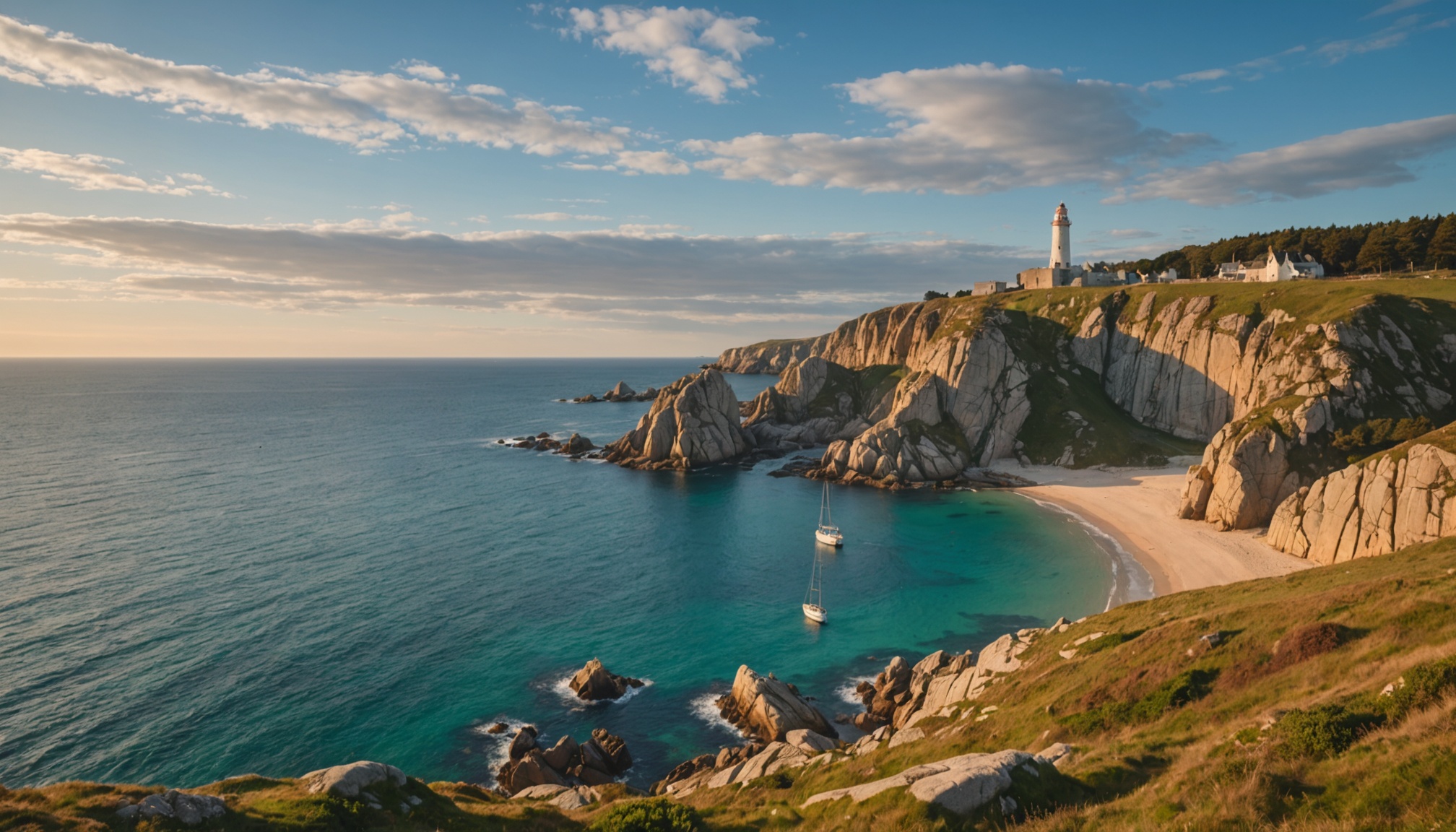
The 2026 summer tourist season is taking on an unprecedented shape in France: shorter, closer to home, and more budget-conscious. The first reports from Atout France (the French tourism development agency) and major booking platforms are converging on the same picture — the season looks solid in terms of volume, but it is organized around a consumer who watches every euro and now prefers Brittany to the Var, the car to the plane, and three well-chosen nights to a week under financial strain.
What's actually changing this summer
The first signal is budgetary. According to the latest market observations, the average budget per booking is down about 20 euros compared with 2025, and the average length of stay is shrinking by roughly 3%. The reflex is no longer to give up on vacations altogether, but to recalibrate them: fewer nights, cheaper accommodation, optimized transportation. Nearly 70% of French people say they want to strictly control their vacation budget, a level rarely seen before the post-2022 inflationary surge.
The second signal is geographic. Western France is capturing an unusually large share of summer searches. Normandy, Brittany, and the Atlantic coast show average nightly rates 20 to 30% lower than those on the Mediterranean coast, which is enough to tip the balance for families weighing every 50-euro difference. Inland cities are also benefiting: Lyon is seeing a roughly +55% increase in searches, Toulouse +45%, while Bordeaux and Menton are confirming their appeal for three- or four-day city trips.
The key figures to remember for 2026
On the macroeconomic side, the trend remains positive. International tourism revenue reached 15.6 billion euros in the first quarter of 2026, up 8% year over year. Occupancy at commercial accommodations is up 10%, driven in particular by peer-to-peer vacation rentals (+25%). The one notable downside: international air arrivals are down 3%, a sign that nearby European — or even French — travelers are carrying increasing weight. Atout France now estimates this group accounts for about 76% of total attendance.
- Average budget: down about €21 per booking.
- Length of stay: –3% compared with 2025.
- Share of vacations taken in France: nearly 85% of trips taken by the French.
- Nearby searches: 38% look first for attractive prices, 37% for nature, 32% for wide open spaces.
- European destinations on the rise: Paros and Kos (+60% in searches), Madeira (+50%).
Consequences for families and local economies
For households, this shift translates into very concrete decisions: booking earlier on the Atlantic coast, settling for accommodations 30 minutes from the beach rather than right on the water, splitting vacations into two or three mini-trips, or trading a week abroad for two extended weekends filled with nearby leisure activities. The car is once again central, bringing with it the usual trade-offs over fuel, tolls, and parking.
For local economies, the effect is mixed. Atlantic destinations and mid-sized cities are enjoying a new influx of visitors, which is sometimes straining their infrastructure. In the south, some lodging providers already adjusted their rates in June to stay competitive. This is one of the season's major takeaways: competition is no longer just between France and Spain, but also between French regions themselves, at a time when every economic trade-off made by households counts. Practical lifestyle tips on organizing vacations have never been so widely consulted.
A summer marked by caution
The overall picture is clear: 2026 will not be a year of rupture, but one of consolidating a new model. French travelers this summer haven't given up on the pleasure of vacationing; they've simply learned to fit it into a tighter budget. Operators who manage to offer clear, flexible, and fairly perceived deals should come out ahead. Others risk seeing their occupancy rates drop, despite overall demand that remains fairly strong.
Frequently Asked Questions
Which French destinations are on the rise in 2026?
Brittany, Normandy, and the Atlantic coast are attracting new visitors, largely thanks to rates 20 to 30% lower than on the Mediterranean coast. City trips to Lyon, Toulouse, Bordeaux, and Menton are also growing strongly.
Has the French vacation budget really gone down?
The average budget per booking is down about €21 year over year, and the average length of stay has shrunk by 3%. Nearly 70% of French people say they plan to strictly control their vacation budget this summer.
Are foreign tourists still coming to France?
Yes — international tourism revenue is actually up 8% in the first quarter of 2026, reaching 15.6 billion euros. However, long-haul air arrivals are down 3%, as nearby European travelers take up a growing share.
Sources
- Atout France — FTO Flash Economic Report, May 2026
- Expedia Newsroom — Summer Vacation 2026: Proximity and Budget Control
- TourMag — Budget, Safety, Destinations: Summer 2026 Trends
This article was written with the help of artificial intelligence. Editorial policy