
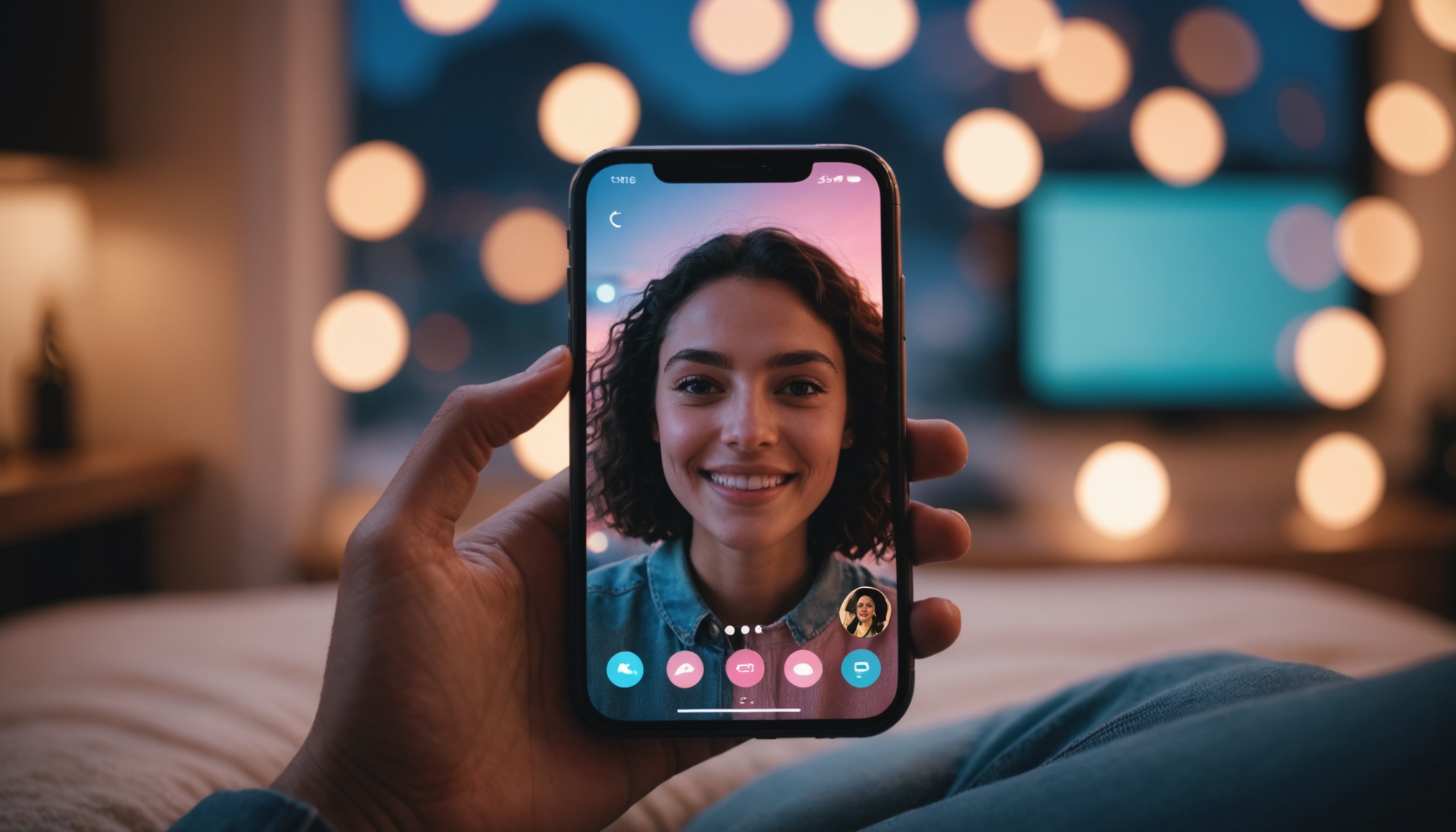
Three minutes on the clock, camera on, zero filters: that's the new format several dating apps are testing to fight swipe fatigue. Video speed dating is gradually establishing itself as an alternative to the endless scroll of profiles, at a time when a large share of singles say they no longer believe in long conversations that go nowhere.
The principle is simple: instead of trading messages for days on end, two already-verified users are connected for a timed video call, a kind of lightning date designed as a real first contact rather than yet another text exchange. If there's a spark, the session can be extended; if not, each person moves on without having wasted hours talking for nothing.
Why platforms are changing their strategy
This shift is anything but trivial. Industry studies published this year point to massive online dating fatigue: nearly one in two single people in France say they feel weary of dating apps, a proportion that climbs even higher among the most active users. The symptom is known as “match fatigue”: too many conversations that fizzle out, too many profiles that never match reality, too much time spent chatting for nothing.
Faced with this reality, platforms are looking to shorten the path between a match and an actual meeting. The timed video format answers a precise need: checking within a few minutes whether there's chemistry, without getting drawn into a written back-and-forth that drags on for weeks. Some apps are also testing in-person evenings or organized activities, a further sign that the return to real life is becoming a selling point in its own right in the online dating industry.
An industry looking to reinvent itself
This evolution comes alongside stronger profile verification systems, a trend we detailed in our article on how identity verification is becoming standard on dating apps. It makes sense: a video call only works if you're certain you're talking to a real person, not a fake profile or an automated account.
This movement is also part of a broader power struggle between platforms, as some long-established apps see their paying subscriber base shrink while others grow, as we recently explained in our analysis of why Hinge is gaining ground while Tinder stalls. Adding more authentic formats, such as timed video calls or group meetups, is becoming a way to retain increasingly demanding users.
This quest for authenticity also ties into another trend observed this year: the rise of group outings instead of one-on-one dates, a format we discussed in our article on the growing trend of group dating among young singles. In both cases, the goal is the same: ease the pressure of the traditional date and bring back some spontaneity to meeting someone.
What this means for users
- Less time wasted on text conversations that go nowhere.
- Stronger verification before any video exchange, to limit fake profiles.
- Short, structured sessions designed to quickly gauge compatibility.
- Lighter social pressure, since the exchange stays brief and comes with no commitment.
Whether this format will win over users lastingly beyond the pilot cities where it's currently being tested remains to be seen. Early feedback suggests genuine interest, particularly among users most worn out by classic swiping, but widespread adoption will depend on platforms' ability to reassure people about the safety of video exchanges, a point where identity verification tools will play a central role.
Frequently Asked Questions
Does video speed dating replace regular messaging on dating apps?
No, it's offered as a complementary option. Users can still exchange messages beforehand, but the timed video call is presented as a faster step to check for potential chemistry.
Do you need to be verified to access these video calls?
Yes, platforms rolling out this kind of feature generally require prior profile verification, through facial recognition or an identity check, before granting access to live video exchanges.
Why are dating apps betting on shorter formats?
Because a significant share of users say they're tired of conversations that drag on without ever leading to a real meeting. Short, structured formats aim to reinject energy into the experience and limit this online dating fatigue.
Sources
TechCrunch,
Global Dating Insights,
Meetic Mag.
This article was written with the help of artificial intelligence. Editorial policy