
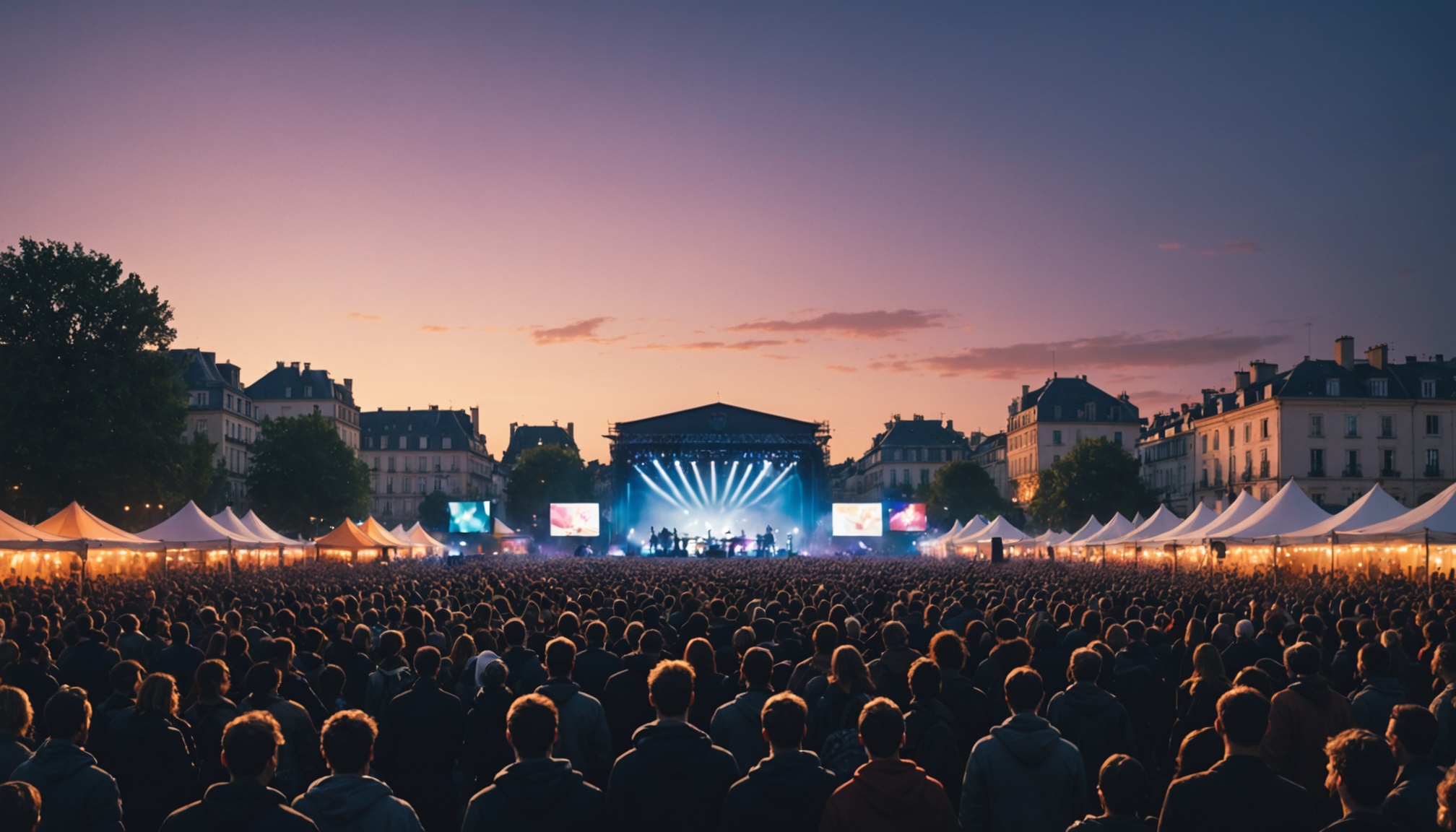
While the live music industry in France continues to face persistent economic difficulties, new festivals keep emerging across the country. The latest example: the Pagaille Festival, which takes over the Place des Quinconces in Bordeaux on August 28 and 29 for its very first edition, headlined by The Cure. It's a paradox that speaks volumes about the vitality — and the fragility — of the French festival ecosystem.
An Ambitious First Edition in Bordeaux
Driven by a desire to turn the heart of Bordeaux into a space for connection and collective energy, the Pagaille Festival brings together an eclectic lineup over two days: The Cure and Slowdive for alternative rock, Charlotte de Witte, Boris Brejcha, and Kittin for electronic music, alongside emerging artists such as aupinard and La Rvfleuze. Beyond the concerts, the event is banking on a full cultural experience: immersive staging, workshops, talks, and a food area. The city of Bordeaux itself is promoting the event on its official calendar, a sign of the importance placed on these new cultural happenings for the city's appeal.
An Industry That Carries Real Economic Weight
This launch comes against a backdrop in which the economic weight of festivals has never been greater. According to data from the Centre National de la Musique (France's national music board), French festivals generated nearly 5.8 billion euros in economic impact in 2025, with a record total attendance of 38 million festivalgoers. France now hosts more than 2,500 music festivals every year, a figure that has risen steadily over several seasons.
- More than 2,500 music festivals held every year in France
- 38 million festivalgoers recorded in 2025, an all-time high
- 5.8 billion euros in economic impact generated by the industry
- Average length of festivalgoers' stays rising, from 2.3 to 2.8 days
Growth That Masks Underlying Fragility
These flattering figures nevertheless conceal a more mixed reality. Nearly 60% of festivals reportedly ran into economic difficulties in 2024, caught between rising production costs, artists' fee demands, and uncertainty around ticket sales. It is precisely in this tense climate that the emergence of new events like Pagaille in Bordeaux, or the Raggamuffin Festival in Nice, which is also holding its first edition in early August, raises a question: is this a risky bet, or proof that public demand remains strong enough to absorb new offerings?
For organizers, the answer often lies in the choice of venue and format. By setting up in an iconic location like the Quinconces square rather than on an out-of-the-way site requiring heavy infrastructure, a new festival cuts part of its fixed costs while drawing on already well-established urban visibility. This shift echoes trends seen in leisure activities and cultural outings more broadly, where downtown events are gaining ground over large-scale gatherings on the outskirts.
What This Means for Festivalgoers
For the public, the arrival of new festivals means more choice, but also an offering increasingly concentrated in certain periods of the summer, especially late August. Fans of culture and live music will increasingly have to choose between several events held on the same dates. This story more broadly illustrates the dynamics of the industry, closely followed in the site's news section.
Frequently Asked Questions
Where and when does the Pagaille Festival take place?
The Pagaille Festival takes place on August 28 and 29 at the Place des Quinconces in Bordeaux, for its very first edition, with The Cure headlining the opening night.
Why are new festivals appearing despite the industry's crisis?
Audiences are still showing up, with record attendance in 2025. Some organizers are betting on urban formats, which are cheaper to set up, to launch despite a tense economic climate for part of the industry.
Is the festival industry profitable for all organizers?
Not always. While overall attendance is rising, a majority of festivals have faced economic difficulties in recent years, caught between rising production costs and uncertainty around ticket sales.
Sources
This article was written with the help of artificial intelligence. Editorial policy
