
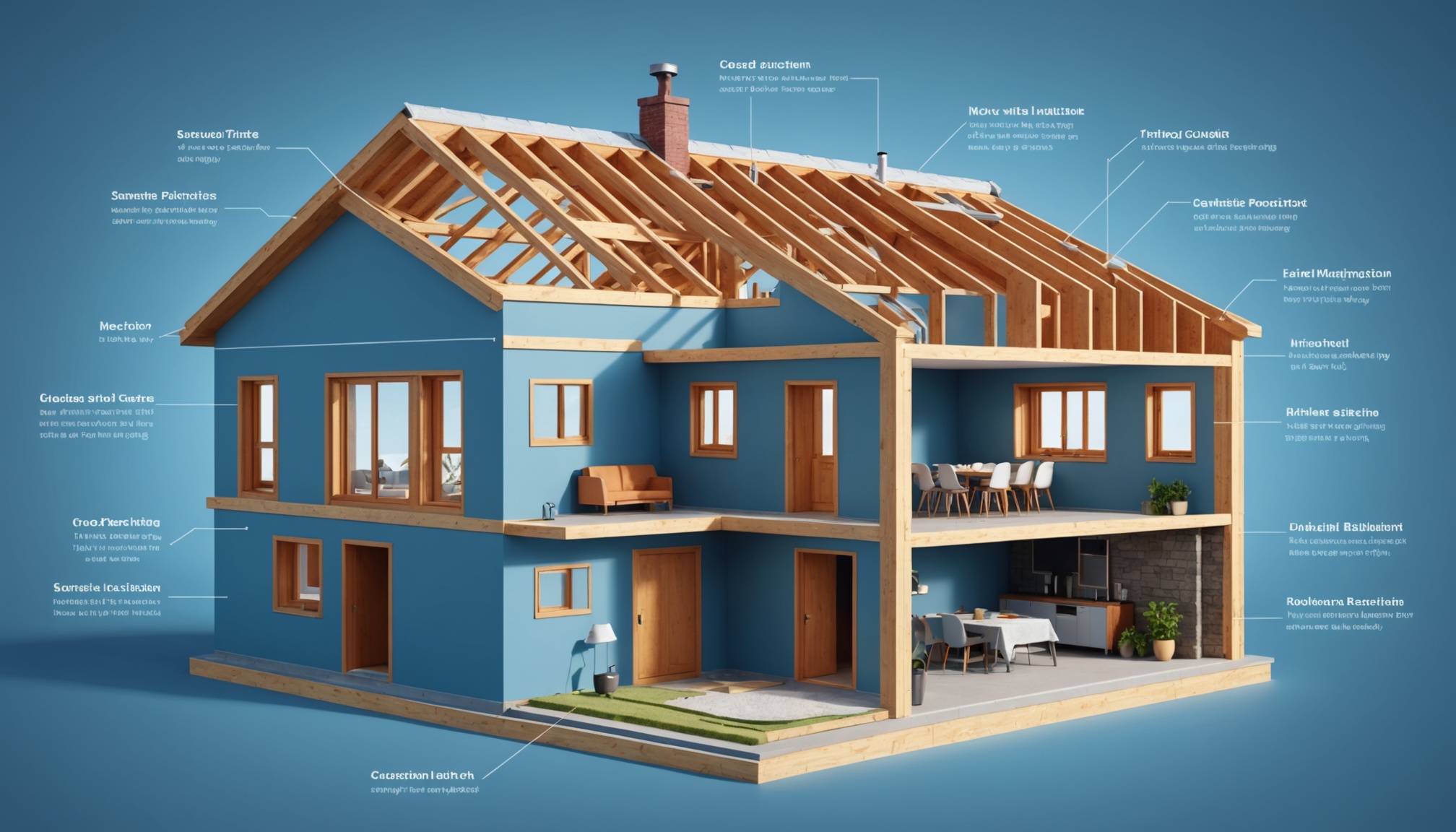
Before signing any quote, it's worth understanding where the heat in a home is actually escaping. Home insulation remains the most effective lever for reducing a heating bill, well before switching out a boiler or installing solar panels. The key is tackling it in the right order, without falling for deals that look too good to be true.
An order of priority that changes everything
Industry professionals recommend starting with the roof and attic, which account for the largest share of heat loss, before moving on to the walls and then the windows. For a facade renovation, it's often the perfect time to add exterior insulation rather than redoing the work twice. To move forward without getting lost in technical jargon, the home insulation guide available at Lowe's breaks down each step before you contact a contractor.
Spotting weak points before getting started
A simple energy performance diagnostic (DPE) already provides some early clues: it rates a home from A to G and details the insulation performance of the walls, roof, ground floor, and windows on a four-level scale. This document is mandatory for both sales and rentals, and since January 1, 2025, a home rated G can no longer be rented out in France. Beyond the DPE, an energy audit carried out by a professional can precisely identify where cold air is getting in and where heat is escaping.
Available aid, with conditions
As of January 1, 2026, MaPrimeRénov', administered by the Anah (the French national housing agency), no longer funds wall insulation as a stand-alone measure: at least two insulation measures must now be combined, aiming for a two-class improvement on the DPE, with guidance from a professional certified as an Accompagnateur Rénov'. Working with an RGE-certified contractor (Reconnu Garant de l'Environnement, a French quality label for energy-efficiency work) is required to access this aid, as is filing the application before signing the quote: starting work too early means losing the subsidy.
Mistakes that cost you
The most common trap remains the thermal bridge: a gap in the insulation around a window or at the junction between a wall and a floor can cancel out much of the expected gain, even with a high-quality material. “€1 insulation” offers should still be approached with caution: now tightly regulated after past abuses, they come with strict income requirements and don't always guarantee careful installation. A good high-performance heating system never makes up for a poorly insulated building envelope: energy saved upstream is always worth more than energy produced downstream.
Compare before committing
Once the work is done, the drop in consumption shows up on the following bills. To track this effect over time and adjust your contract if needed, an energy comparison tool helps confirm that your chosen supplier still fits your home's new, lower consumption.
Frequently asked questions
What should you start with first?
The roof and attic, which account for the largest share of heat loss, before addressing the walls and then the windows.
Do you have to use an RGE-certified contractor?
Yes: to access public aid such as MaPrimeRénov', the professional must be certified Reconnu Garant de l'Environnement.
Does insulation work change the energy performance diagnostic?
Yes, better insulation of the walls, roof, or windows directly improves a home's DPE rating.
Sources
Ministry of Ecological Transition – energy performance diagnostic
Anah – 2026 financial aid guide
ADEME – energy performance diagnostic
This article was written with the help of artificial intelligence. Editorial policy
