
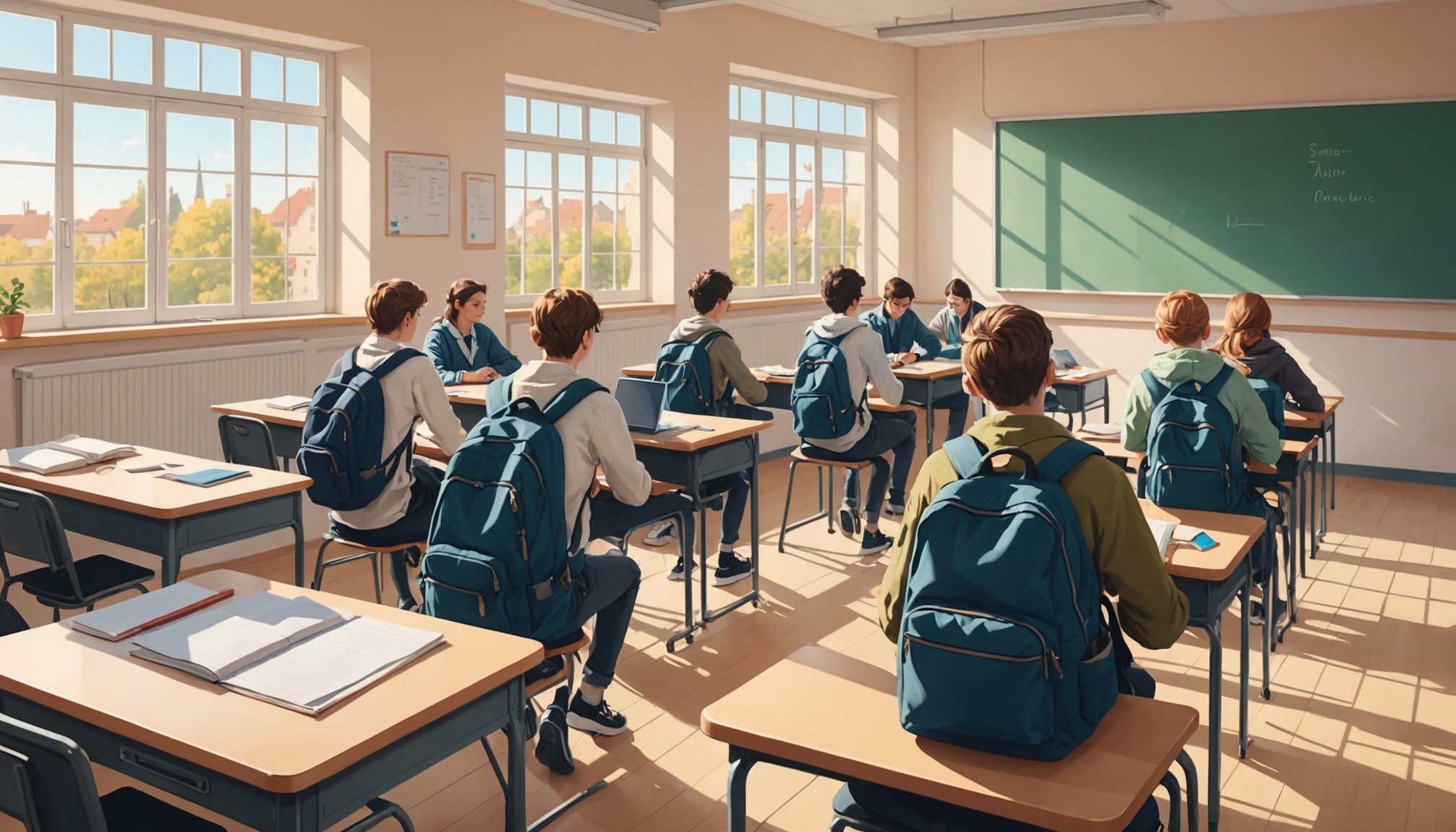
Since the start of the school year, cell phones have been banned in French high schools nationwide, following the same principle already in place in middle schools since September 2025. Enacted on August 24, 2026, the measure has now been in effect in schools for several weeks. Between acceptance, workarounds, and adjustments to school rules, here's what you really need to know, exceptions included.
A “bell-to-bell” ban
The principle is simple on paper: from the first class to the last class of the day, students must not use their phone anywhere on school grounds. Unlike in middle school, where the device often has to be stored in a locker or a locked pouch, high school students are allowed to keep their phone on them, as long as it stays turned off and unused during class, recess, and breaks between classes.
The ministry's stated goals
The rule is meant to achieve three things: create a calmer environment for concentrating in class, restore face-to-face interaction between students during breaks, and reduce opportunities for cyberbullying, which often thrives on social media checked on the sly between classes. This same goal had already driven this school year's new rules for students and families.
The exceptions provided by law
The rule isn't absolute. Several categories of students and situations are exempt from the strict ban:
- Students with disabilities, when the device is necessary for their schooling
- Students enrolled in a BTS (a two-year vocational degree) or in a prep class (classe préparatoire) within the high school
- Uses explicitly authorized by a teacher for educational purposes (checking the ENT, the school's online portal, doing research, or borrowing from the CDI, the school library)
Each school must specify, in its own internal rules, the places and times when phones must be turned off and put away, which explains why actual enforcement varies noticeably from one high school to another.
What it means for families and students
For parents, this measure is part of a broader series of changes this school year, from new curricula to heightened vigilance against school bullying. Some schools are going further by adding awareness sessions, following the same logic as programs like the mandatory financial education passport for eighth-grade students, which also aim to prepare young people for responsible digital and financial habits. Educational digital tools, such as the online learning platforms used by schools, remain accessible via school-provided computers, without going through a personal smartphone.
Key takeaways
- Ban in effect since the start of the 2026 school year, from the first class to the last
- Students may keep their phone on them, as long as it's turned off and put away
- Exceptions: disabilities, BTS, prep classes, authorized educational uses
- The exact rules are set by each high school's internal regulations
- The measure extends the ban already in place in middle schools since September 2025
Frequently Asked Questions
Are cell phones completely banned in high school?
No. Students may keep their phone on them, but it must stay turned off and put away during class, recess, and breaks between classes, except with a teacher's explicit permission or in special situations covered by the school's internal rules.
Who is exempt from this ban?
Students with disabilities for whom the device is necessary, as well as students in BTS or prep classes within the high school, are subject to a different set of rules.
Was this measure already in place in middle school?
Yes, the cell phone ban has been enforced in middle schools since September 2025. The measure was extended to high schools starting with the 2026 school year.
Sources
This article was written with the help of artificial intelligence. Editorial policy
