
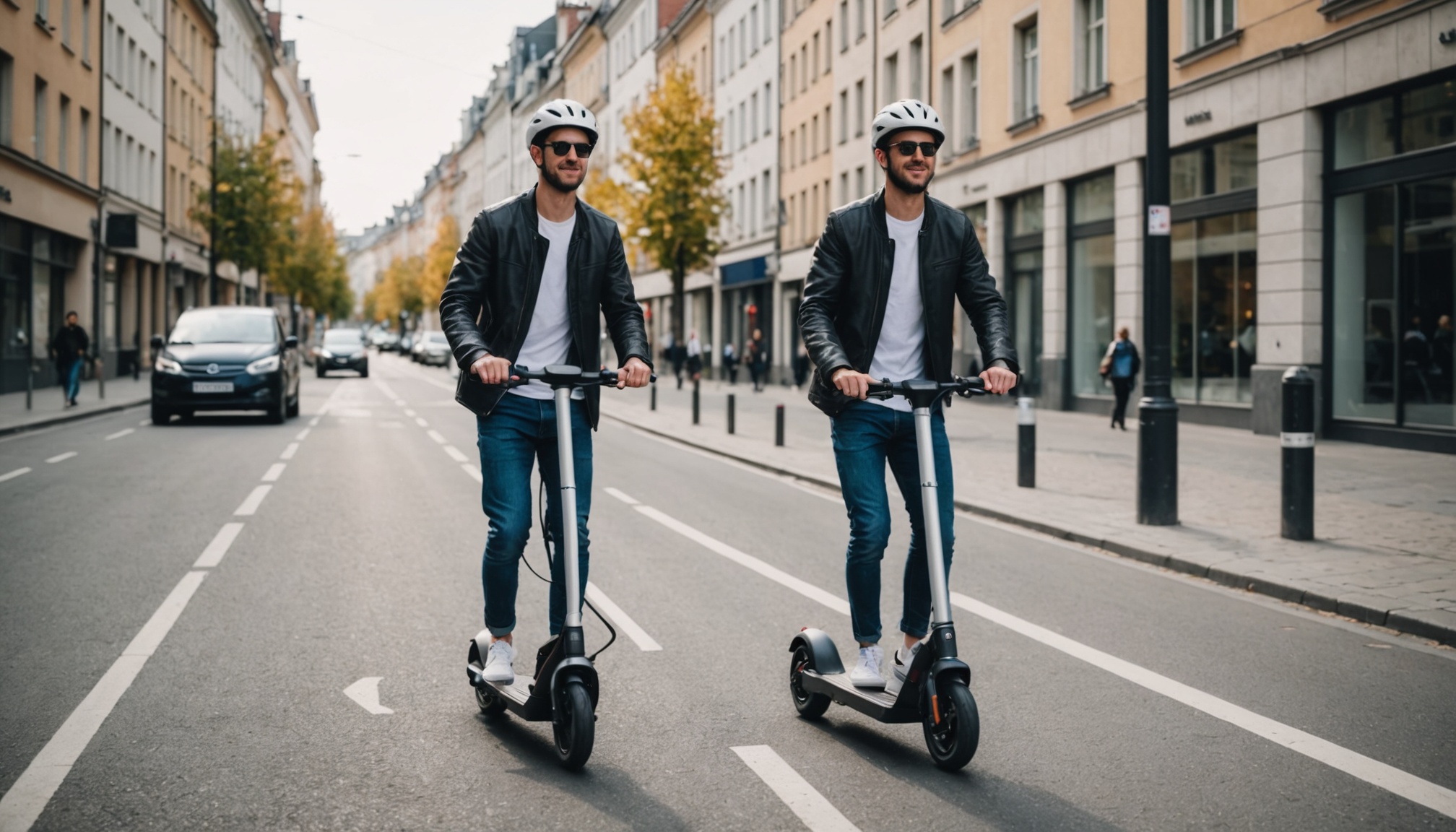
In France's major cities, the electric scooter has become an everyday mode of transportation, used just as often for commuting to the office as for covering the last leg of a trip on public transit. Between convenience, regulations, and safety concerns, here's what you need to know before getting equipped and riding with confidence.
Choosing the Right Electric Scooter: Key Criteria
Before buying, three criteria deserve particular attention: the battery's real-world range, the scooter's weight (which matters if you need to carry it up stairs or onto public transit), and the quality of the brakes. Manufacturers often advertise an optimistic range: it's wise to subtract about 30% from the figure listed on the spec sheet to estimate the distance you'll actually cover day to day. To compare models and price ranges, you can browse alienrides.com, which offers a wide selection under electric scooter for sale suited to different needs, from occasional urban rides to more intensive daily commuting.
Regulations You Need to Know Before Riding
Electric scooters fall into the category of motorized personal transportation devices (EDPM, for “engins de déplacement personnel motorisé”), governed by the French traffic code under a 2019 decree. Riding is restricted to people age 14 and up, carrying a passenger is prohibited, and speed is capped at 25 km/h. In built-up areas, riders must use bike lanes or paths where they exist; otherwise, they must ride on the road, which is limited to 50 km/h. A point that's often overlooked: liability insurance is mandatory, just as it is for a moped. These rules aren't so different from those that apply to motorcycle insurance, where lacking coverage exposes riders to a flat-rate fine.
Safety: Numbers That Call for Caution
According to data from France's National Interministerial Observatory for Road Safety (ONISR), fatalities linked to motorized personal transportation devices rose sharply in 2025, topping 79 deaths compared with 44 the year before. Most victims were not wearing a helmet at the time of the accident. While helmets are only mandatory for riders under 12 in built-up areas, wearing one is still strongly recommended at any age, just like following the road safety rules every responsible driver should know. Riders also need to stay alert around pedestrians, especially at shared crossings, where caution remains essential for all road users.
A Mode of Mobility That Fits into a Broader Urban Ecosystem
The electric scooter doesn't always replace the car: it often works alongside other solutions, such as carpooling for longer trips or public transit for intercity connections. This complementary relationship shows how urban carpooling can also help improve mobility for commuting to work, alongside individual devices for the last mile.
Frequently Asked Questions
Do you need a license to ride an electric scooter?
No, no license is required, but the legal minimum age is 14, and certain traffic rules apply just as they would for any vehicle.
Is insurance really mandatory?
Yes. Liability insurance covering damage caused to others is mandatory; riding without it is an offense punishable by a fine.
Can you ride an electric scooter on the sidewalk?
No, riding on the sidewalk is prohibited except for devices capped at a maximum of 6 km/h; electric scooters must use bike lanes or, failing that, the road.
Sources
- Road Safety (French Ministry of the Interior) — EDPM regulations
- Road Safety — the requirement to insure EDPMs
- Argus de l'Assurance — 2025 road mortality report
This article was written with the help of artificial intelligence. Editorial policy