
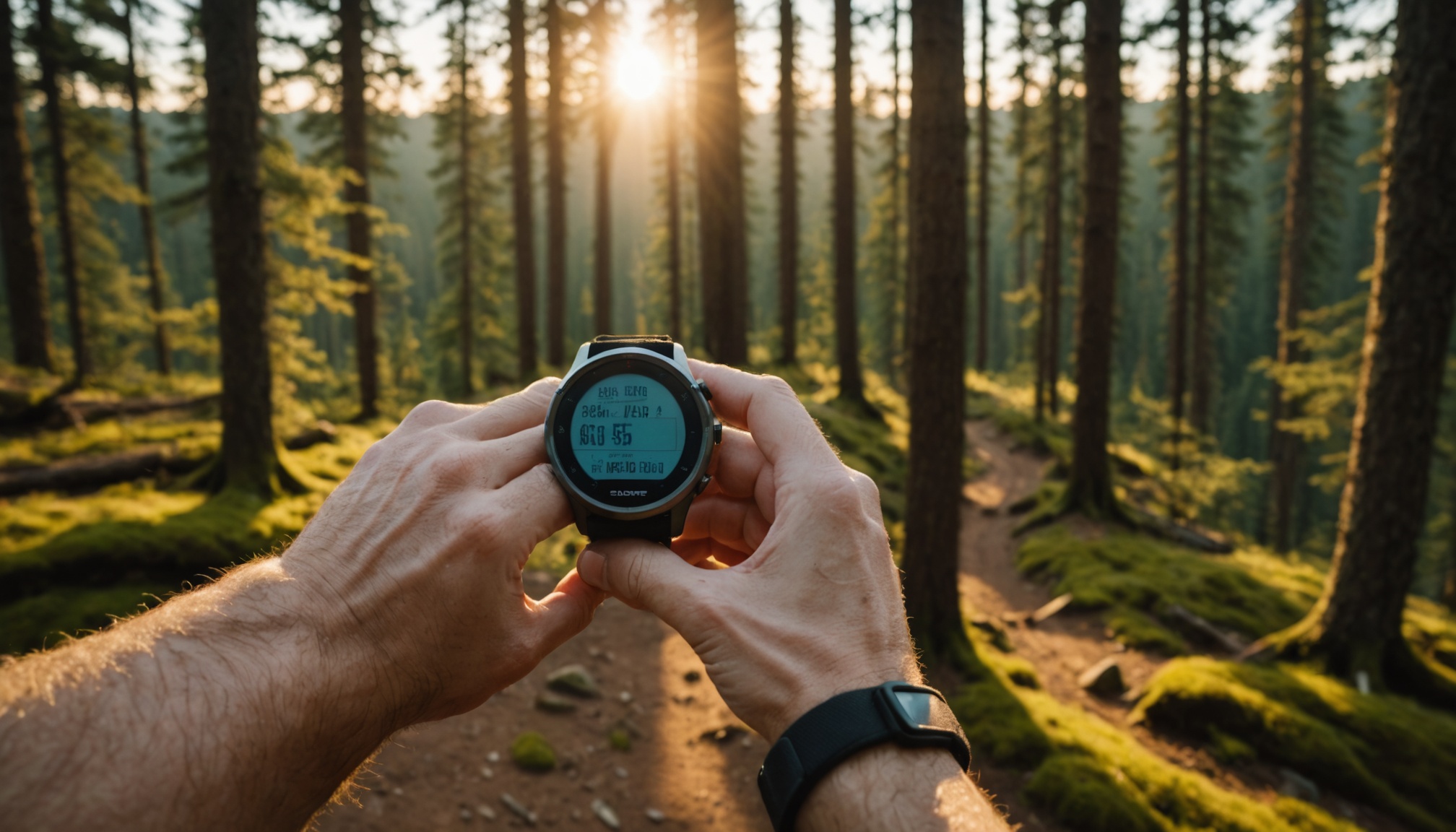
Running, trail, hiking, or triathlon: the GPS watch has become the go-to accessory for tracking workouts, measuring progress, and avoiding getting lost out in nature. But between entry-level models and multisport watches costing several hundred euros, the technical differences can be hard to assess from a simple product spec sheet. Here are the criteria that really matter, and the mistakes to avoid before buying.
GPS accuracy: the criterion that changes everything
Not all GPS watches offer the same quality of location tracking. Entry-level models often rely on a single satellite frequency, while higher-performance watches cross-reference several constellations (GPS, Galileo, GLONASS, BeiDou) and use multiband GPS (dual L1/L5 frequency). This technology corrects part of the signal error: accuracy improves from around 5 meters with single-frequency tracking to under 2 meters in difficult conditions, such as under tree cover or between buildings. For anyone who regularly runs through forests or dense urban areas, this is worth checking before buying; browsing garmin.com's full lineup of GPS watch models makes it easy to compare different ranges and onboard technologies.
Battery life, often more decisive than design
The second criterion, too often overlooked, is battery life in active GPS mode, which has nothing to do with the standby battery life listed on the box. For short outings or typical running use, around twenty hours of continuous GPS tracking is plenty. Long-format trail runners and ultra-distance athletes should aim for significantly more: at least 40 hours, ideally with a battery-saving mode that reduces the GPS polling rate to last several days. Miscalculating this point can mean a dead screen mid-race, long before the finish line.
And wrist-based heart-rate tracking: reliable or not?
Most GPS watches now come with an optical heart-rate sensor on the wrist, removing the need for a chest strap in everyday use. Its accuracy, however, remains variable: at a steady effort, the gap compared with a chest strap (about ±1 beat per minute) runs around ±2 to 3 beats per minute at the wrist, which is perfectly acceptable. During interval training or intense efforts with rapid pace changes, though, the gap can climb to 10 beats per minute. Cold weather, sweat, a loose-fitting band, or thick arm hair also interfere with optical readings. For threshold training or workouts in precise heart-rate zones, a chest strap remains the more reliable option.
Mistakes to avoid when buying
- Choosing based solely on design or brand, without checking the actual GPS frequency.
- Underestimating your battery-life needs if you practice trail running or long-distance hiking.
- Blindly trusting optical heart-rate readings for demanding interval training.
- Forgetting to check compatibility with a tracking app or an external chest strap.
Beyond the technical specs, choosing a GPS watch is often part of a broader approach: finding a sporting activity that lasts. Some people rediscover that sport can also be experienced differently than in competition mode, away from stopwatches and rankings. Others take the opportunity of a new watch purchase to try an activity they'd never attempted before: beginners will find concrete ideas among these hobbies accessible to beginners. A choice that, deep down, sometimes says a lot about us: our leisure habits often reveal more about us than our professional habits.
Frequently Asked Questions
Do you absolutely need a multiband GPS watch?
Not necessarily. In open outdoor settings, a single-frequency GPS watch is generally enough. Multiband becomes useful in dense forests, urban environments, or canyons, where the satellite signal is disrupted.
Does a GPS watch replace a heart-rate chest strap?
For standard endurance training, the optical wrist sensor works fine. For threshold work or demanding interval training, a chest strap remains more accurate.
How much battery life should you look for based on your activity?
Around twenty hours of active GPS is enough for standard running; long-trail and ultra-distance enthusiasts should aim for at least 40 hours, with a battery-saving mode available.
Sources
Sport Passion — comparison of multiband GPS watches
RunMotion Coach — accuracy test of optical heart-rate sensors versus a chest strap
Club Cardio Sport — chest strap and wrist heart-rate monitors
This article was written with the help of artificial intelligence. Editorial policy