
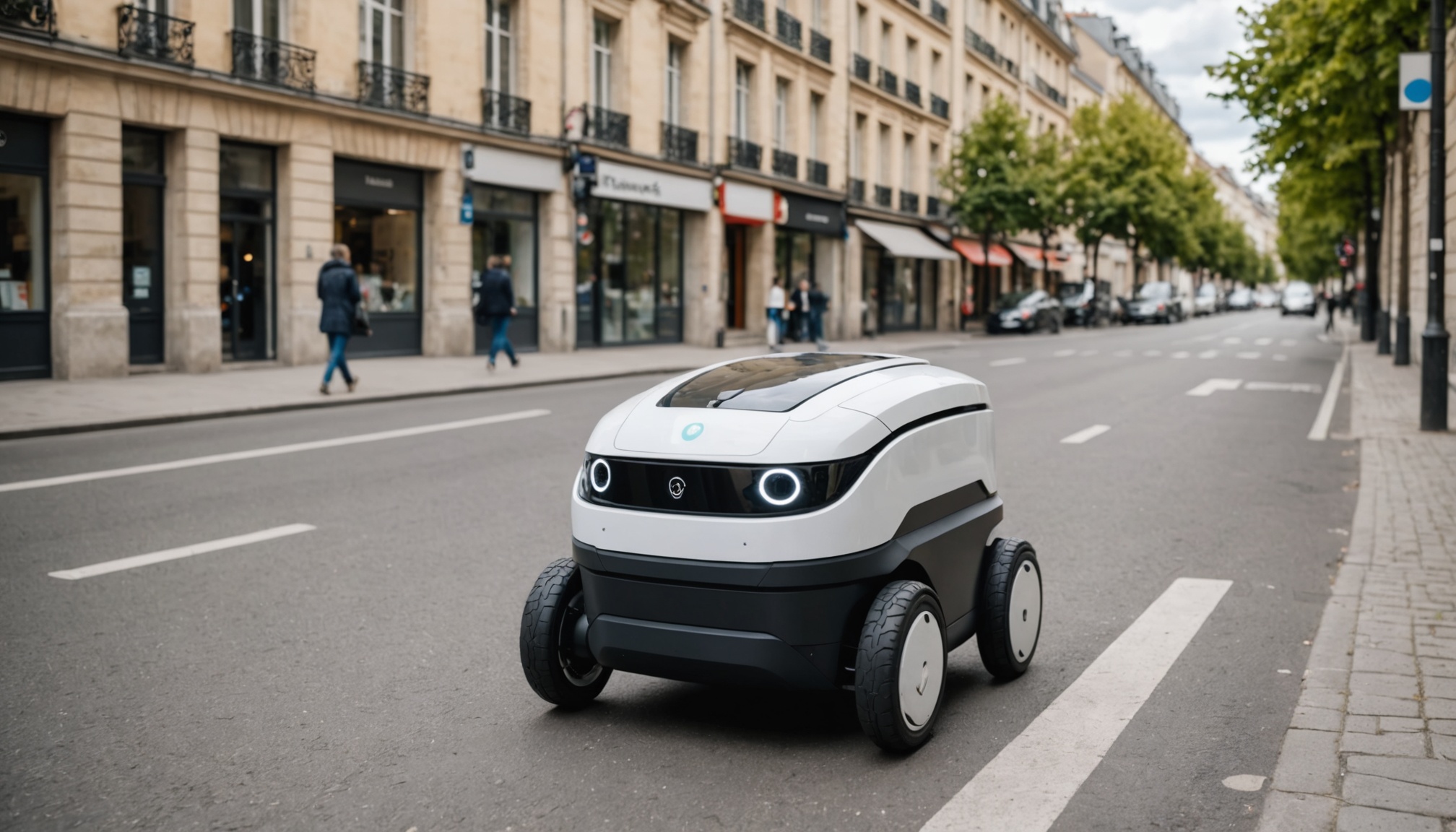
A decree published in the Journal officiel (France's official gazette) on August 7, 2026 is changing the game for urban logistics: France is becoming the first country in Europe to pave the way for the approval of fully autonomous delivery robots, with no driver or remote pilot on board. The decision is accelerating a sector that had until now been confined to trials.
What the Decree Actually Changes
Signed on July 28, 2026 and published a few days later, the text amends the registration rules for Category L vehicles to add a new class: driverless electric delivery robots, less than 4 meters long and capable of carrying up to 1,000 kilograms of goods. In practical terms, these machines can now obtain official approval before operating on public roads, whereas until now they operated under an experimental, case-by-case exemption framework.
The Ministry of Ecological Transition, Regional Planning, and Transportation describes this change as a shift “from experimentation to industrialization.” For companies in the sector, this marks the end of a regulatory gray area that had slowed the large-scale rollout of these fleets.
Ten Years of Trials Before the Legal Framework
This approval did not come out of nowhere: it builds on nearly ten years of trials conducted in France around autonomous mobility, including several focused specifically on package delivery, notably in Montpellier. These tests allowed public authorities to assess how these robots behave in real-world conditions, on sidewalks and bike paths, before granting them a lasting regulatory status.
At the European and international level, the European Union and the United Nations are still working on a common approval framework for this category of vehicle. Rather than waiting for these discussions to conclude, France chose to move forward on its own, positioning itself as a regulatory pioneer in a segment that several companies in the digital technology sector consider strategic for last-mile logistics.
What's the Appeal for Businesses and Cities?
- Cleaner last-mile logistics: the robots in question are exclusively electric.
- Less noise pollution in dense urban areas, since these machines travel at low speed.
- Potential to reduce delivery costs for stores and e-commerce platforms.
- An industrial opportunity for French companies positioned in robotics and electric mobility.
Industry players remain cautious, however: approval opens a regulatory door, but it does not mean immediate mass deployment. Local governments will still need to adapt their roads and traffic rules, and manufacturers will need to have each model certified before it can enter commercial service. The topic is also of interest to the broader economy, given how heavily logistics weighs on the costs of neighborhood businesses.
Frequently Asked Questions
What exactly does the decree of July 28, 2026 authorize?
It creates a new sub-category of approvable vehicles: driverless electric delivery robots, up to 4 meters long and capable of carrying up to 1,000 kg of goods.
Is France really the first in Europe on this front?
Yes. According to the Ministry of Ecological Transition and several specialized media outlets, France is the first European country to adopt an approval framework dedicated to this category of robots, even before European and UN efforts on the subject are completed.
Will these robots replace delivery workers in the short term?
No. The approval paves the way for gradual industrialization, but each model still has to be certified individually, and for now, use will remain limited to short trips in suitable urban areas.
Sources
- French Ministry of Ecological Transition — official press release
- Usine Digitale
- Journal de l'Économie
This article was written with the help of artificial intelligence. Editorial policy