
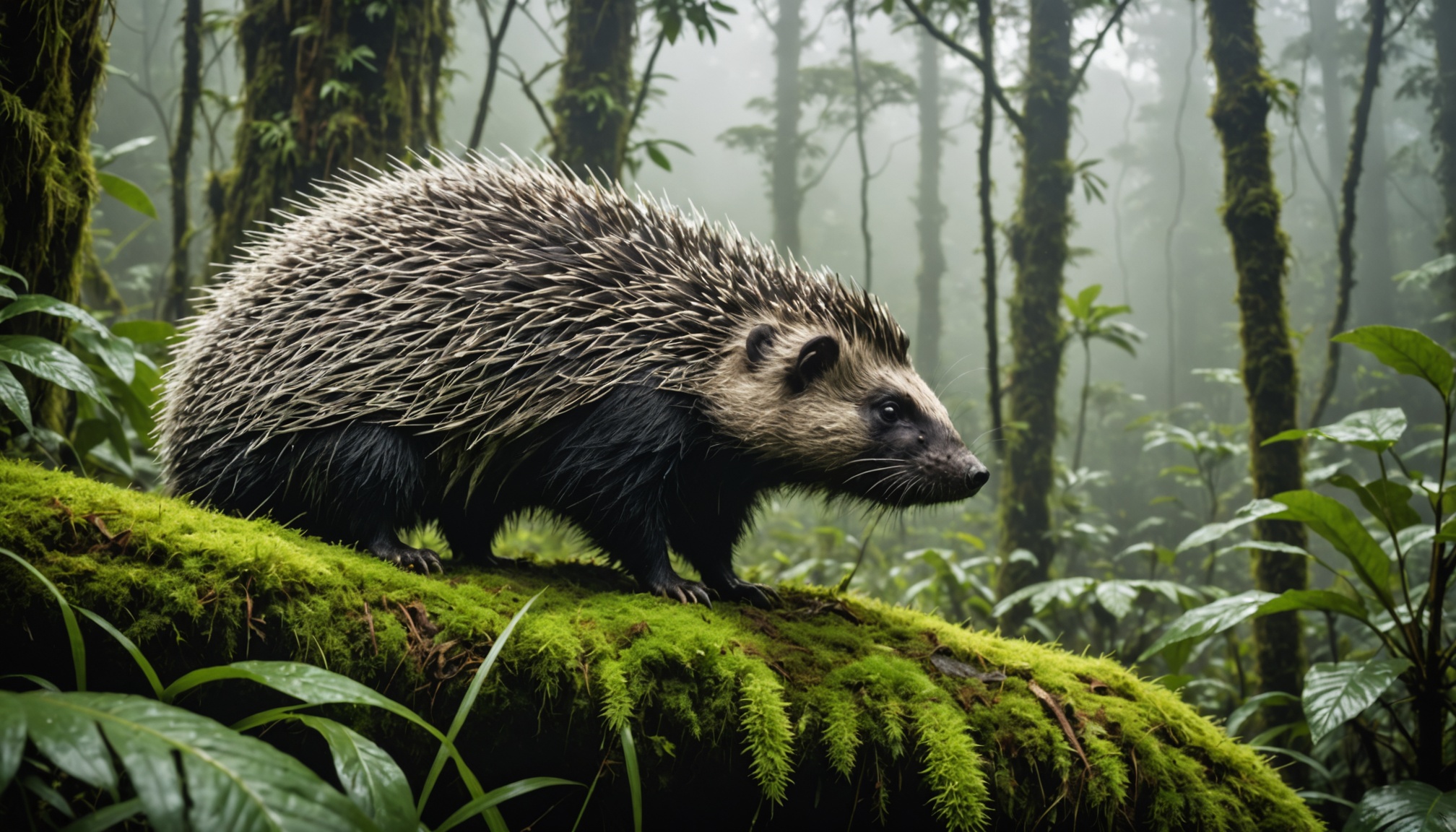
In Ecuador, an ecological corridor nestled between the Andes and the Amazon has just delivered a major surprise to scientists: 69 species of small non-flying mammals have been recorded there, twice as many as were officially known until now. Among them, a brand-new porcupine species has just been described. A discovery that reshuffles the deck on our understanding of Andean biodiversity.
A Corridor Between the Andes and the Amazon Under Scientific Scrutiny
The Llanganates-Sangay ecological corridor, which links two Ecuadorian national parks on either side of the upper Pastaza River basin, was the subject of eight years of field expeditions between 2016 and 2024. Researchers from the National Biodiversity Institute (Inabio), the Central University of Ecuador, the EcoMinga Foundation, and the Rainforest Trust network surveyed about a dozen localities across this rugged area, straddling the high Andes and the Amazon rainforest.
The result: 51 small mammal species were documented directly in the field, and the full data set brings the total to 69 species recorded in the corridor, compared to only around thirty previously known in this area. The study's authors describe this territory as an “irreplaceable center of taxonomic and functional diversity” of the tropical Andes.
A New Porcupine Species Among the Findings
The highlight of this research: the description of a brand-new species, named Coendou sangay, a porcupine belonging to the family Erethizontidae, discovered within the mammal community of Sangay National Park. By adding this new taxon to a fifteen-year inventory, researchers now count 170 mammal species for this park alone, making it one of the richest biodiversity hotspots on the planet.
- 69 small non-flying mammal species recorded in the Llanganates-Sangay corridor.
- A new porcupine species, Coendou sangay, described for the first time.
- 170 mammal species total recorded in Sangay National Park alone.
A Quarter of the Species Already Threatened
The good scientific news comes with a warning: about 25% of the recorded species are already considered threatened with extinction, such as the rare rodent Rhagomys septentrionalis. This proportion directly challenges the economic development projects planned for the region, which could conflict with the need to preserve this corridor between the Andes and the Amazon, regarded as a strategic point for the connectivity of South American biodiversity.
Why This Discovery Matters
Beyond its scientific significance, this study illustrates just how much of terrestrial wildlife remains poorly understood, even in areas already classified as protected. It also revives the debate over the resources devoted to exploring global biodiversity, as citizen science inventories and field expeditions continue to reveal new species every year, even in areas that have been studied for decades. For nature lovers and scientists alike, this kind of work also feeds general culture around the richness of life on Earth and the urgency of preserving it.
Frequently Asked Questions
Where is the Llanganates-Sangay corridor located?
It is a protected area in Ecuador that links Llanganates and Sangay national parks, straddling the Andes mountain range and the upper Pastaza River basin, on the edge of the Amazon.
What is Coendou sangay?
It is a new porcupine species from the family Erethizontidae, described in 2026 by researchers working in Sangay National Park, Ecuador.
Why is this discovery important for conservation?
Because about a quarter of the 69 recorded species are already threatened with extinction, strengthening the case for protecting this corridor against economic development projects in the region.
Sources
- Infobae — Registran 69 especies de pequeños mamíferos no voladores en zona protegida de Ecuador
- Noticias Ambientales — 69 Mammal Species Discovered in Llanganates-Sangay, Ecuador
- PeerJ — Discovery of a new species of Coendou within the hyper-diverse mammalian community of Sangay National Park
This article was written with the help of artificial intelligence. Editorial policy