
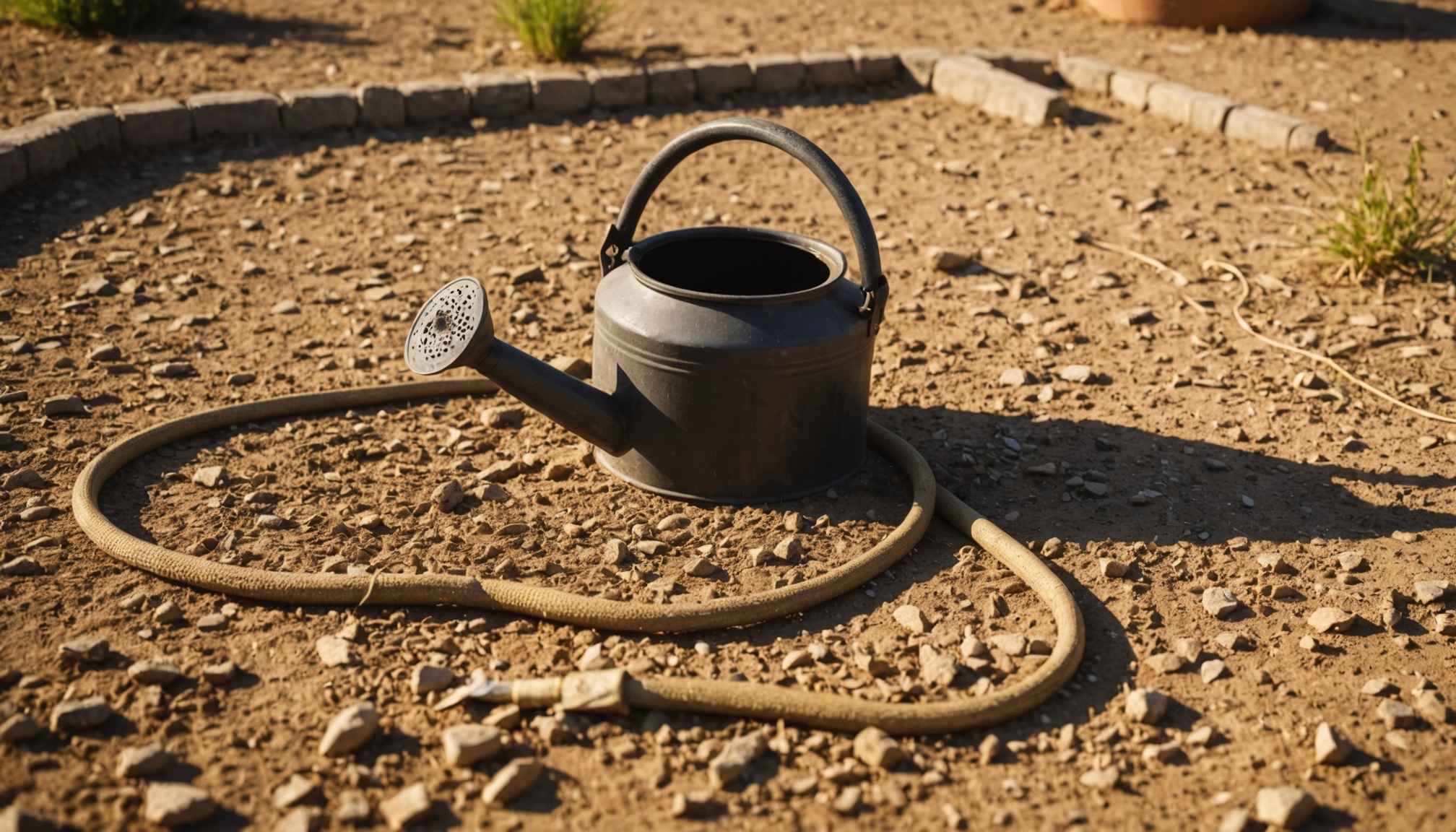
Watering your lawn, filling your pool, or washing your car is no small matter this summer. Facing a drought of exceptional scale for early July, water restrictions are spreading nationwide: as of July 1, 2026, 84 of France's 96 mainland departments have at least one municipality subject to limits on tap water use. Behind these measures lies a precise, graduated legal framework backed by penalties: the so-called “drought” prefectural orders (arrêtés sécheresse). Here's what they allow, what they ban, and what it costs to ignore them.
Four alert levels, graduated obligations
The system is built on prefectural orders issued department by department, sometimes basin by basin. French regulations distinguish four levels, each triggering increasingly strict measures:
- Vigilance: a simple call for responsible use, with no binding bans;
- Alert: the first targeted bans (watering restricted to certain hours, filling private pools, washing vehicles outside of equipped car-wash facilities);
- Heightened alert: the same restricted uses, but with shorter allowed time windows and broader bans;
- Crisis: only priority uses remain allowed — drinking water, health, safety, and sanitation.
According to France's ministry for ecological transition, 27 departments were at the crisis level in early July, with conditions particularly severe in the southwest: Charente, Charente-Maritime, Dordogne, Lot-et-Garonne, and Pyrénées-Atlantiques are among the hardest-hit areas.
What's actually banned at home
For homeowners, the most common bans starting at the alert stage cover watering lawns and ornamental gardens (often prohibited between 8 a.m. and 8 p.m., or entirely banned), filling or topping off private swimming pools, washing cars at home, and cleaning terraces or building facades. Vegetable gardens generally get more lenient treatment, with watering allowed at off-peak hours, early morning or late evening. These rules apply to tap water as well as to private wells and boreholes, something many residents don't realize. For good garden-care habits during a drought, check out our Home section.
Enforcement and fines: what the law says
Failing to comply with a drought order is a fifth-class misdemeanor (contravention de 5e classe) under French law. The fine can reach €1,500 for an individual, rising to €3,000 for repeat offenses. For legal entities — businesses, local governments — the amount can be multiplied by five, up to €7,500. Enforcement is carried out by France's water police (police de l'eau) and the French Office for Biodiversity (l'Office français de la biodiversité, OFB), which step up patrols during the summer. Reports from neighbors can also trigger an inspection. For more on your regulatory obligations, see our Law section.
How to check the rules that apply to your address
Restrictions vary from one municipality to another, sometimes even within the same department. The most reliable approach is to check VigiEau, France's official online service that shows, based on a simple address, the alert level in effect and a detailed list of banned or regulated uses. Full prefectural orders are also published on prefecture websites and posted at town halls. Keep in mind that the situation changes quickly, with some departments tightening measures several times within a few weeks. A weekly check is recommended, much like other seasonal tasks covered in our Practical Life section.
If rain stays scarce over the coming weeks — a possibility, though not a certainty, according to seasonal forecasts — more departments could move to heightened alert or crisis levels at the height of summer. Voluntary conservation remains the best way to avoid tougher restrictions.
Frequently Asked Questions
How do I know if my municipality is subject to water restrictions?
Go to the official VigiEau website (vigieau.gouv.fr) and enter your address: the alert level and banned uses appear immediately. The prefectural order is also available at your town hall.
What fine could I face for not complying with a drought order?
Up to €1,500 for an individual (a fifth-class misdemeanor), €3,000 for repeat offenses, and up to €7,500 for a legal entity.
Can I still water my vegetable garden or fill my pool?
Vegetable gardens can generally still be watered at off-peak hours (early morning or evening), except during a crisis-level alert. Filling private pools, however, is banned starting at the alert level in most departments.
Sources
- VigiEau — official French public information service on water restrictions
- Allier Prefecture — Water use: new restrictions
- CLCV — Water restrictions: your rights and obligations during a drought
This article was written with the help of artificial intelligence. Editorial policy