
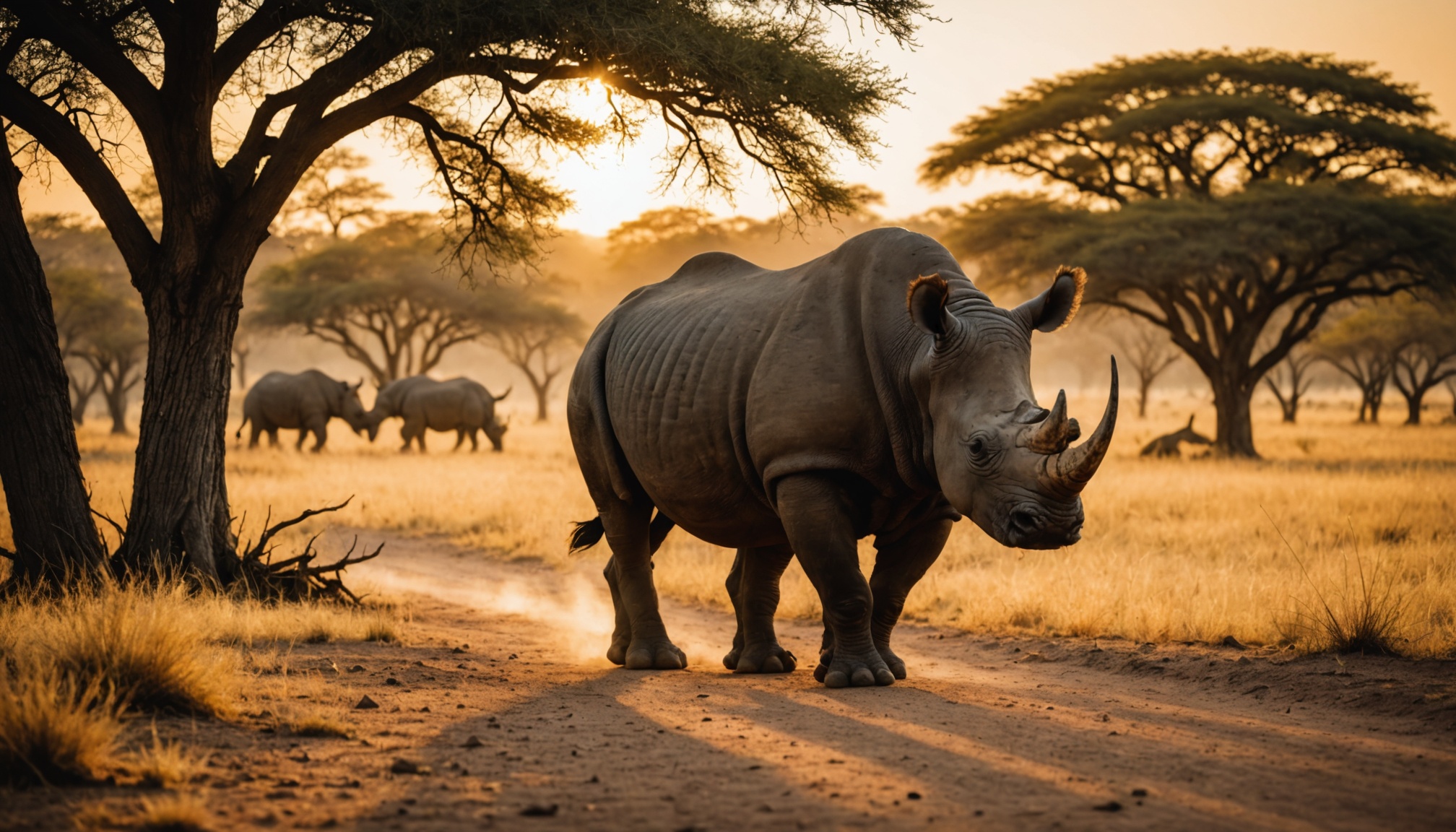
A symbol of African wildlife long threatened by poaching, the black rhino is staging one of the most spectacular population rebounds of the past thirty years. According to Zimbabwean authorities, the country's total rhino population, black and white combined, topped 1,000 individuals this year for the first time since the early 1990s—a threshold no one expected to see again.
A Return Thirty Years in the Making
On May 5, 2026, the Zimbabwe Parks and Wildlife Management Authority (ZimParks) announced the reintroduction of 17 black rhinos into Matusadona National Park, on the shores of Lake Kariba. These animals are the direct descendants of those evacuated in an emergency three decades ago, when the site had become too dangerous for them. This is the first time in more than thirty years that the species has set foot again on this territory, once considered one of its last strongholds in the Zambezi Valley.
The Numbers Behind a Historic Collapse
To grasp the scale of this recovery, it helps to look back at the wave of poaching that ravaged the region for nearly nine years. Rhino horns, falsely believed to have medicinal properties, drove populations down at a staggering rate:
- Across the entire Zambezi Valley, numbers fell from roughly 3,500 to fewer than 400 black rhinos within just a few years.
- In Matusadona alone, the local population collapsed from around 250 to just 16 individuals in a single year, at the very start of the 1990s.
- Worldwide, the black rhino population dropped from roughly 65,000 individuals in 1970 to just 2,300 in the early 1990s, before beginning a slow recovery.
A Recovery Driven by Anti-Poaching Efforts
Zimbabwe now counts 616 black rhinos and 417 white rhinos, for a total of more than 1,000 animals. This result is directly linked to stepped-up surveillance, an increase in anti-poaching patrols, and close individual monitoring of each animal, often fitted with microchips or tracked by dedicated teams. At the continental level, the latest assessment by the International Union for Conservation of Nature (IUCN) puts Africa's rhino population at roughly 6,788 individuals at the end of 2024, compared with just under 6,800 black rhinos currently recorded worldwide according to specialized organizations.
An Issue That Goes Beyond Conservation Alone
Beyond protecting an iconic species, this recovery also has an impact on the local economy. Zimbabwe's national parks, a driving force behind safari tourism, draw a significant share of their revenue from the presence of megafauna, rhinos chief among them. A living animal, observable over several decades by visitors from around the world, represents an economic and cultural value far greater than that of its horn on the black market. This observation, increasingly shared by governments in the region, feeds into a broader discussion about the link between conservation, local development, and tourist appeal—a topic we regularly follow in our tourism section.
This dynamic also shows how biodiversity remains a constantly shifting news topic, between warnings about endangered species and sometimes unexpected successes on the ground—a thread that runs through both our culture pages and those devoted to the economy of industries tied to nature.
Frequently Asked Questions
Why Did the Black Rhino Decline So Sharply?
Mainly due to intensive poaching for its horn, used in certain Asian markets despite the lack of scientific evidence for its supposed properties. Within a few decades, this pressure drove the global population down from tens of thousands of individuals to roughly 2,300 in the early 1990s.
How Many Black Rhinos Live in Zimbabwe Today?
According to 2026 data from Zimbabwean authorities, the country has 616 black rhinos, in addition to 417 white rhinos, for a total of more than 1,000 animals for the first time in over thirty years.
Has Matusadona Park Become a Safe Habitat Again?
The reintroduction of 17 black rhinos in May 2026 marks a turning point, but it comes with a strengthened, long-term surveillance system, a condition authorities consider essential to prevent a new wave of poaching.
Sources
National Geographic —
30 Millions d'Amis —
Save the Rhino International
This article was written with the help of artificial intelligence. Editorial policy