
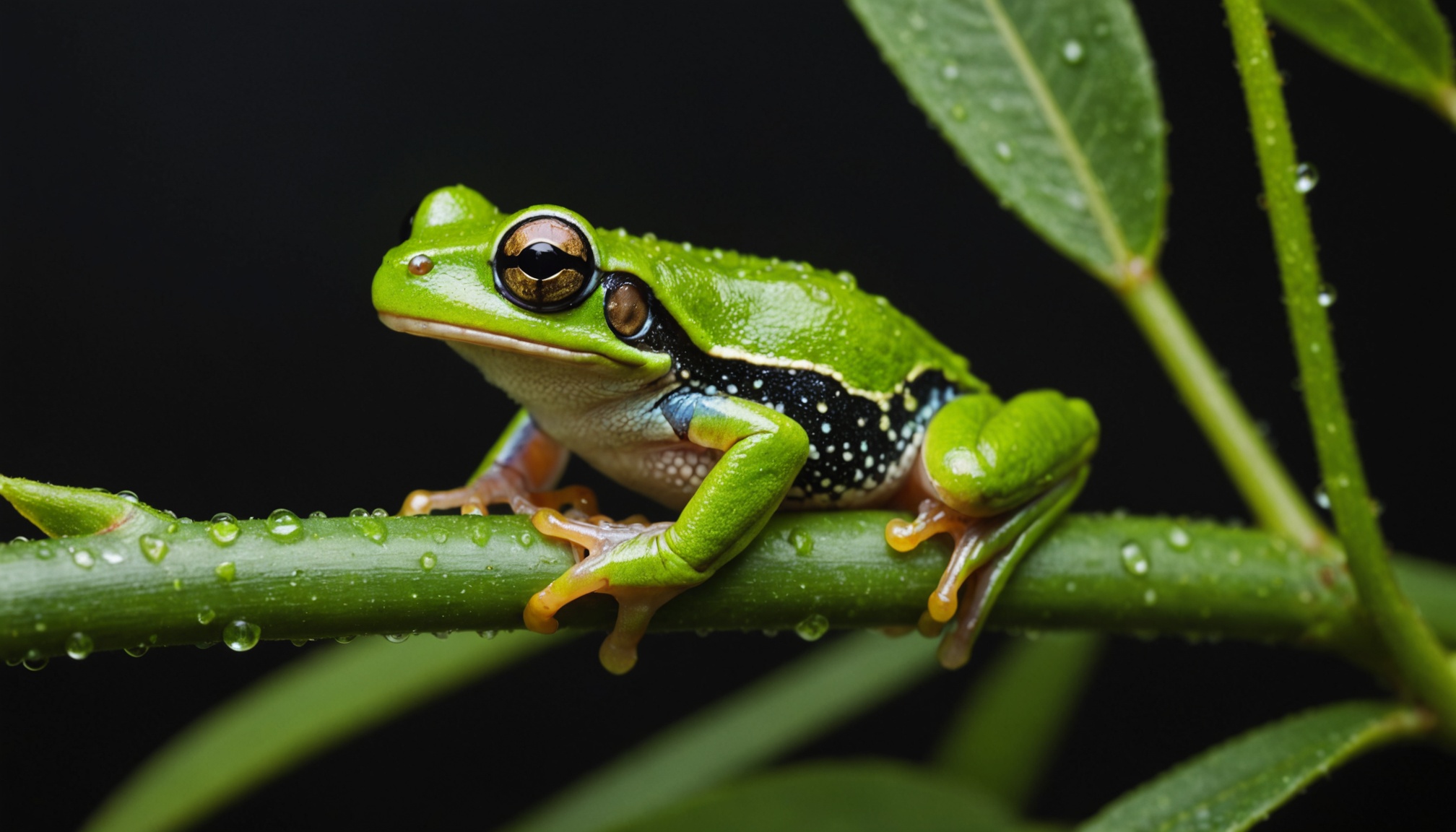
It fits in the palm of a hand, sings at night, and seems to live nowhere else but perched on the coffee plants of a single mountain village. Researchers have just described a new species of frog, discovered in Costa Rica, already nicknamed the “coffee frog” given how closely its fate appears tied to this plant.
A discreet tree frog nestled in the plantations
The discovery was made in San Lorenzo de Tarrazú, a mountain village in the province of San José, in a region of Costa Rica known for its coffee plantations. The animal is a small tree frog, measuring less than four centimeters, with a green body marked by dark green spots that provide effective camouflage among the foliage. Scientists also know it as the “rana de las nacientes,” or “spring frog,” a reference to the small bodies of water where it reproduces.
What especially caught researchers' attention is its behavior: this tree frog is strictly nocturnal and particularly active after nightfall, when it climbs coffee plants to sing. Males have a translucent throat that inflates with each call, a short, high-pitched signal meant to attract females in the darkness of the plantations.
A habitat that is also a threat
This frog's connection to coffee plantations isn't just a curiosity—it's also what makes it vulnerable. The pesticides used to protect the crops pose a direct risk to the species. These chemicals disperse into the air, seep into the soil, and eventually reach the bodies of water where tadpoles develop, before they've even had time to become adults.
This situation illustrates a broader phenomenon across Central America: many amphibian species, often discovered in agricultural areas or near human activity, depend on a fragile balance between land use and the preservation of natural habitats. A species confined to a territory as small as a single mountain village is, by nature, particularly exposed should its environment deteriorate.
Why this discovery matters
- It's a reminder that new species continue to be discovered, even in regions already widely farmed by humans.
- It highlights the role of agricultural plantations as substitute habitats for certain wild species.
- It raises questions about pesticide use near bodies of water, which are essential to amphibians' life cycles.
- It illustrates renewed scientific interest in Central American amphibians, one of the world's most biodiverse regions.
Beyond the curiosity it represents, this small nocturnal tree frog is a reminder of how biodiversity can take hold in unexpected places, including in the heart of ordinary crops like the coffee millions of people drink every day. To continue exploring our relationship with everyday life and consumption, check out our articles in the Practical Living section, or escape into other discoveries in our Travel section.
Frequently Asked Questions
Where was this new frog species discovered?
It was observed in San Lorenzo de Tarrazú, a mountain village in the province of San José, Costa Rica, in a coffee-growing region.
Why is it called the “coffee frog”?
Because it was found perched on coffee plants, where it sings at night, its habitat appearing closely tied to these plantations.
Is this species endangered?
Pesticides used in coffee plantations pose a risk to it, particularly because they can contaminate the bodies of water where its tadpoles develop.
Sources
- CNews — Costa Rica: a new species of “singing” frog discovered in coffee plantations
- Orange Actu — Nocturnal and coffee-loving: a new frog species discovered in Costa Rica
- Le Devoir — A nocturnal, coffee-loving frog species discovered in Costa Rica
This article was written with the help of artificial intelligence. Editorial policy
