
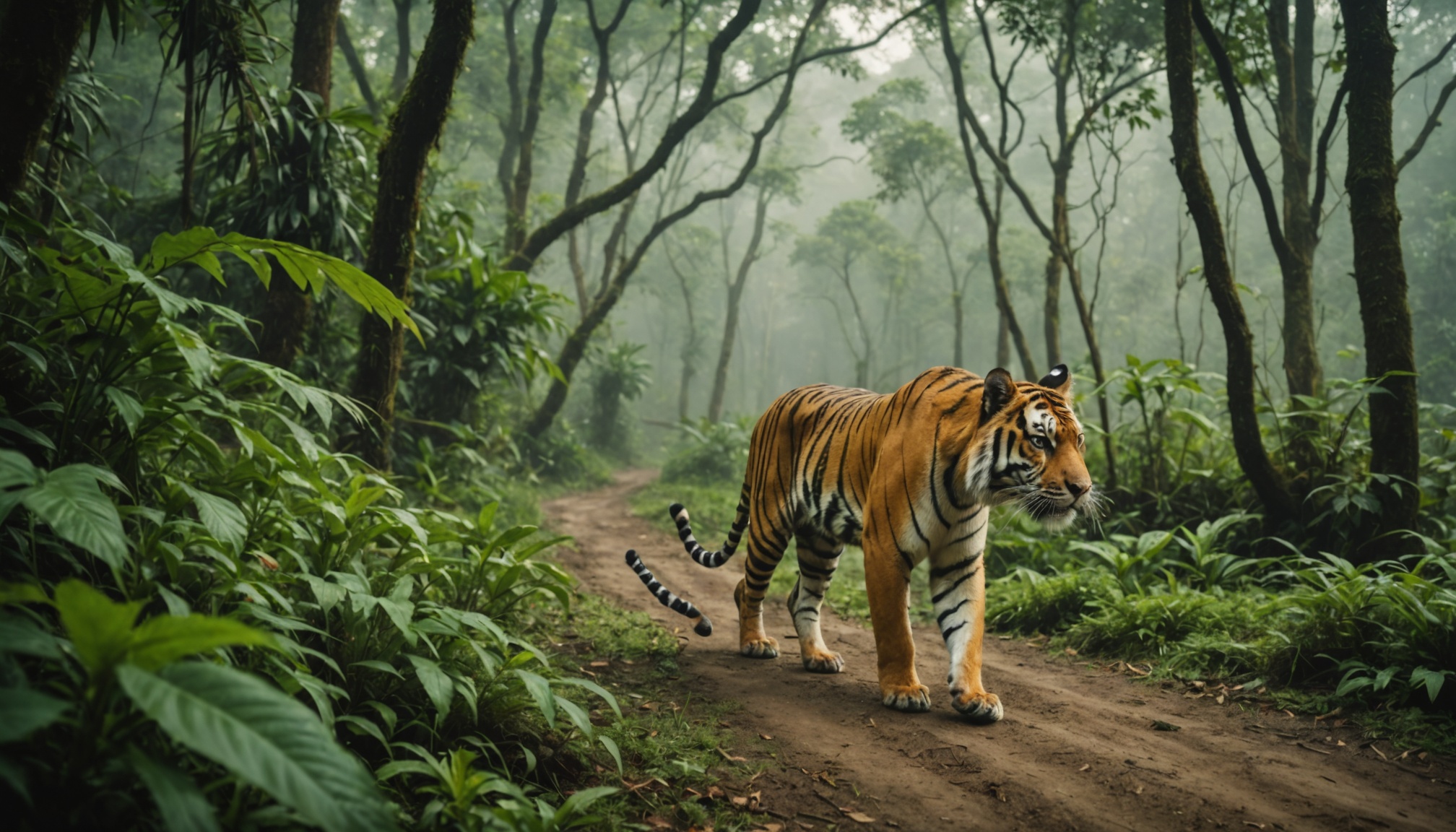
Nepal has just announced a figure that marks a turning point for wildlife conservation: its tiger population now stands at 429 individuals, up from 355 in the previous census in 2022. The result has been hailed as one of the greatest animal conservation successes of the decade, but it also raises new questions about coexistence between humans and the big cat.
A Census Conducted Over Several Months
The figures come from the 2026 National Tiger and Prey Survey, carried out between December 2025 and July 2026 by Nepal's Department of National Parks and Wildlife Conservation and the Department of Forests and Soil Conservation, with support from the NTNC (the National Trust for Nature Conservation, a Nepali conservation organization), WWF Nepal, and the Zoological Society of London (ZSL Nepal). The study combines camera traps and field surveys across all of the country's reserves.
The progress is remarkable over the long term: Nepal had only 121 wild tigers in 2010. The country had already become the first in the world to reach, as early as 2022, the international goal of doubling its tiger population within a decade, a target set at the 2010 Saint Petersburg summit. Growth has continued since at an average annual rate of about 5%.
Chitwan and Bardiya Lead the Way
The geographic distribution confirms the central role of the country's large southern reserves. Chitwan National Park alone is home to 145 tigers, followed by Bardiya National Park with 112 individuals. Next come Parsa (71), Banke (51), and Shuklaphanta (50). These protected areas, connected by ecological corridors, have benefited from sustained investment in anti-poaching efforts and habitat restoration.
- 429 tigers counted in 2026, up from 355 in 2022
- +21% growth over four years
- Chitwan (145) and Bardiya (112) account for nearly 60% of the population
- International doubling target already achieved since 2022
A Success That Tests the Forests' Carrying Capacity
This result is not without its downside, however. Authorities and conservation organizations estimate the carrying capacity of Nepal's forests at around 400 tigers. The current population would therefore already exceed this threshold, a signal that worries wildlife specialists. More tigers in a limited territory means greater dispersal of young males in search of new territories, and thus an increased risk of encounters with human populations living on the edges of the parks.
Nepal's Department of Conservation acknowledges that the rising number of big cats is accompanied by an intensification of human-tiger conflicts, particularly in agricultural areas near the reserves. The country will therefore now have to reconcile two seemingly contradictory priorities: continuing to protect the species while also securing the safety of nearby communities, for example through electric fences, early warning systems, or the extension of forest corridors into still-unoccupied territories.
A Model Watched Beyond the Himalayas
For wildlife protection organizations, Nepal's case shows that a coherent conservation policy, combining rigorous scientific monitoring with the involvement of local communities, can durably reverse the decline of an iconic species. The tiger nonetheless remains classified as an endangered species worldwide, with a total wild population estimated at just over 5,000 individuals across all of Asia, far below the 100,000 specimens recorded at the start of the 20th century.
Nepal's success could also benefit the local economy, as the country has long relied on ecotourism around its national parks as an engine of development for rural regions, a sector closely followed in the field of sustainable tourism. This news fits more broadly into the major global environmental news trends of the year.
Frequently Asked Questions
How many wild tigers does Nepal have in 2026?
The 2026 national census counts 429 wild tigers across Nepal, up from 355 in the previous survey conducted in 2022.
Why has the tiger population grown so much?
This growth is the result of a sustained conservation policy since the 2010s: stronger anti-poaching efforts, restoration of forest habitats, and the creation of ecological corridors linking the country's major reserves.
What are the risks associated with this growth?
Specialists believe the population now exceeds the carrying capacity of Nepal's forests, which increases the risk of conflicts between tigers and residents living near the national parks.
Sources
- WWF – Wild Tiger Population Growth Highlights the Critical Work of Coexistence in Nepal
- France 24 – La population de tigres continue d'augmenter au Népal
- The Himalayan Times – Nepal's tiger population climbs to 429
This article was written with the help of artificial intelligence. Editorial policy