
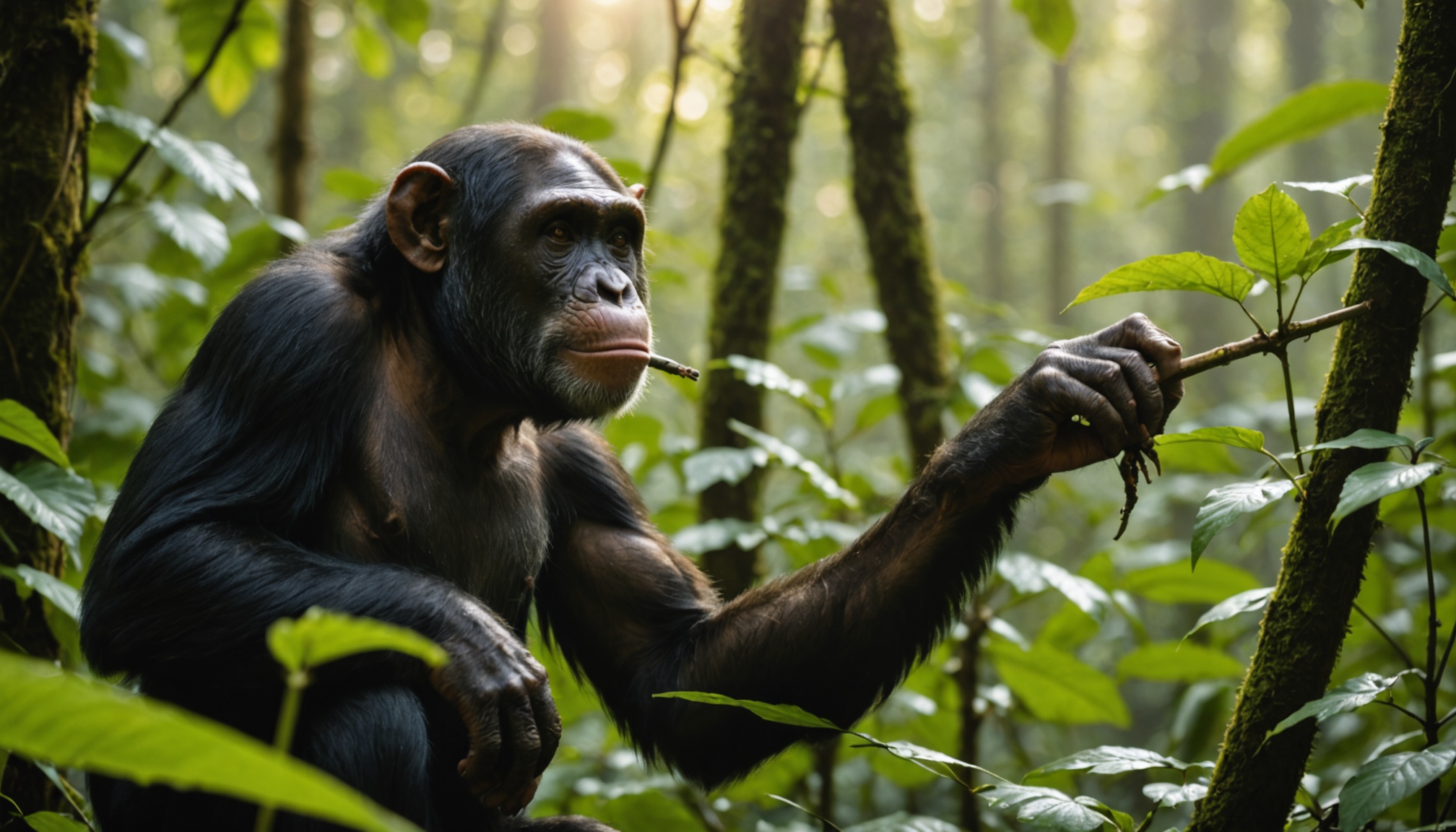
Long reserved for the human species, the concept of animal culture is gradually gaining ground in the life sciences. Among chimpanzees, orcas, and crows, neighboring groups adopt habits all their own, independent of their genetic makeup and their environment, and then pass them on to the next generations. These “traditions” tell a different story about animal intelligence—and raise an unprecedented question for nature conservation.
What Exactly Is Animal Culture?
We speak of animal culture when a behavior spreads through social learning—by observing and imitating fellow members of the group—rather than through instinct or ecological necessity. In other words, the same behavior can exist in one group and remain completely unknown to another just a few miles away, even though nothing biologically separates them.
What researchers have observed comes down to three points:
- the behavior is learned, not innate;
- it varies from one group to another within the same species;
- it is passed down over time, from generation to generation.
From Chimpanzees to Crows: A Catalog of Traditions
Great apes offer the best-documented example. A large-scale review of more than 40 chimpanzee groups in Africa identified around forty traditional behaviors: ways of using tools, the use of plants for self-medication, feeding techniques, communication rituals, and even ways of building a nest for the night. The cultural “toolkit” changes from one group to the next.
But primates are far from alone. Among orcas in the Southern Ocean, certain families have developed a spectacular hunting technique: swimming together to create a wave that washes over a piece of ice floe and slides a seal into the water. Crows in New Caledonia, meanwhile, cut genuine tools from the rigid leaves of the pandanus tree to dislodge insects. As for sperm whales, they form clans recognizable by their own vocal dialects and hunting traditions.
When Adults Take the Time to Teach
Remarkably, this transmission isn't always passive. Among some orcas, adults appear to slow down their movements in the presence of younger individuals, as if to make learning easier. On top of this, a form of “conformity” has been observed in several species: individuals tend to adopt the group's majority behavior, which anchors the tradition and stabilizes it over the long term. It is precisely this mix of innovation and imitation that gives rise to a culture.
A Living but Fragile Heritage
This discovery is changing the way conservation is viewed. Protecting a species is no longer just about safeguarding its genes and habitat: it also means preserving its collective know-how. Yet the loss of just a few experienced individuals—the “elders” who hold the knowledge of migration routes or hunting techniques—can be enough to erase knowledge accumulated over generations.
Aware of what's at stake, the Convention on Migratory Species, affiliated with the United Nations, now incorporates animal culture and social learning into its thinking on wildlife protection. This shift calls for thinking not just in terms of the number of animals, but in terms of traditions that must not be lost. The connections between culture, education, and the animal world have likely not finished surprising us.
Frequently Asked Questions
Is Animal Culture Really Comparable to Human Culture?
No, and scientists remain cautious. There's no question of articulate language or art here. The term refers to a specific mechanism: the social transmission of learned behaviors. The richness and complexity remain nowhere near comparable to human cultures.
Which Animals Show the Most Cultural Behaviors?
Chimpanzees currently have the best-described repertoire, but traditions have been observed in many groups: orcas, sperm whales, dolphins, elephants, crows, and even certain fish. The field of study is expanding year by year. On the subject of self-medication with plants, see also our health section.
Why Does This Matter for Nature Conservation?
Because lost know-how can't simply be replaced by repopulation. If the individuals who know a migration route or a hunting technique die out, the group can permanently lose that skill, even if it remains large in number.
Sources
- CNRS Le Journal — Astonishing Animal Cultures
- The Conversation — Animals Have Their Traditions Too
- Convention on Migratory Species (CMS) — Animal Culture and Social Learning
This article was written with the help of artificial intelligence. Editorial policy