
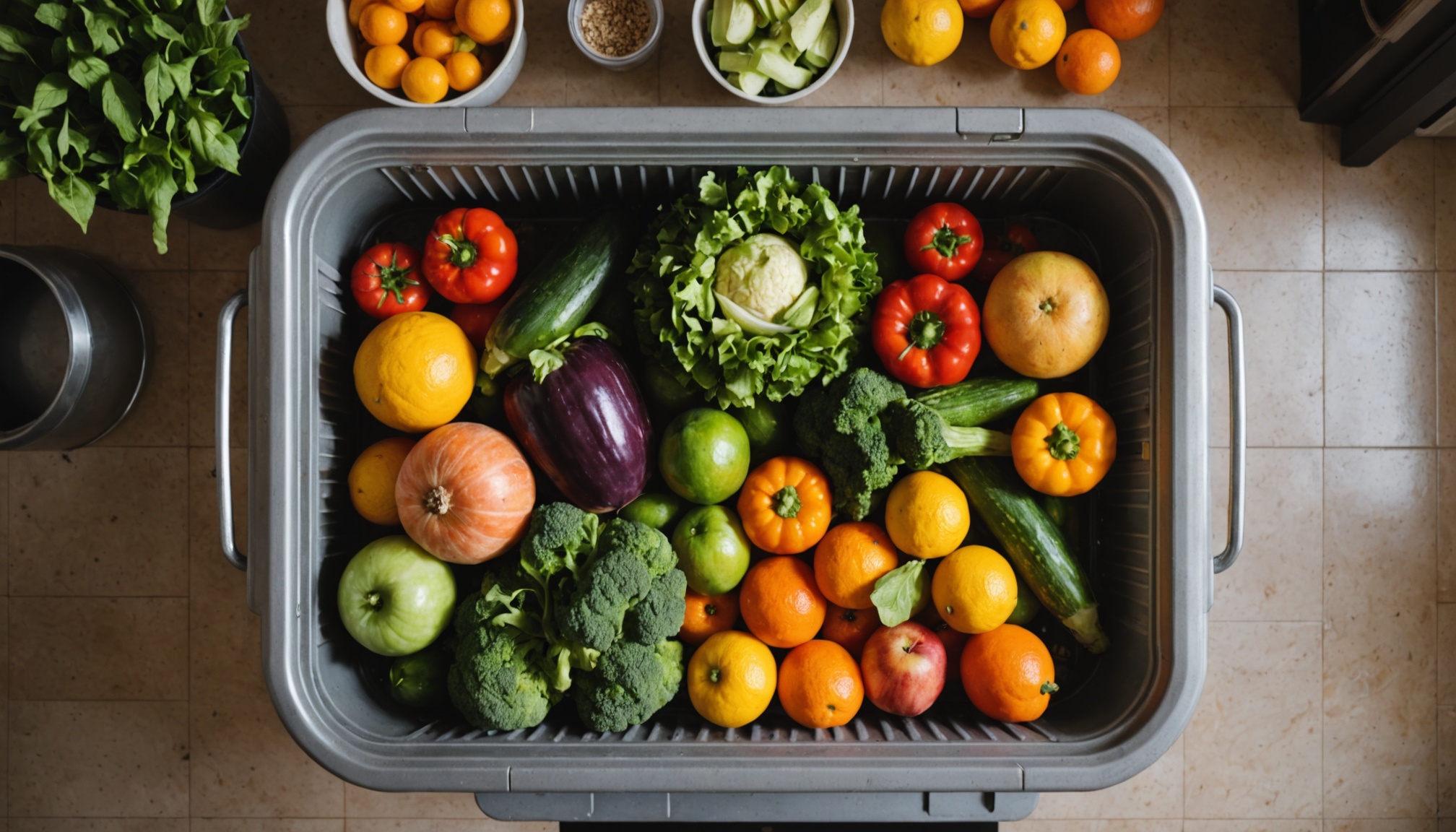
Each year, France produces nearly 9.7 million tons of food waste, the equivalent of 142 kg per person. This figure has remained nearly stable, even though the country had committed, through the 2016 Garot law, to cutting its food waste in half by 2025. The target was not met, and the bill keeps climbing.
How Much Food Really Ends Up in the Trash?
Of the 142 kg of food waste produced per person each year, part of it consists of inedible remains — peels, bones, shells — which aren't technically waste in the strict sense. The volume that is truly avoidable, meaning food that was still fit to eat when thrown away, is estimated at 55 kg per person per year. On a national scale, that adds up to several million meals thrown away every day, across households, food service, and retail. Some supermarkets are trying to address this by selling damaged fruits and vegetables at a discount instead of throwing them away, a practice that is becoming more common amid pressure on harvests.
An Economic and Climate Cost That's Far From Negligible
According to the Agency for Ecological Transition (Ademe), this waste costs French households, businesses, and local governments around €16 billion a year — an amount that weighs directly on household budgets, already strained by other expenses. On the environmental side, producing, transporting, and processing this discarded food is estimated to account for 4.2% of the country's greenhouse gas emissions, a share comparable to that of entire industrial sectors.
A 2025 Promise That Went Unfulfilled
The law on fighting food waste, passed in France in 2016, set a clear target: cut food waste in half in food retail by 2025, and in food service by 2030. Now that the results are in, national figures show the intermediate target was not met, even though some sectors — food retail chains in particular, which are required to donate unsold goods to charities — reduced their losses faster than the rest of the food chain.
More Attentive Consumers, But a System Still in Need of an Overhaul
The latest GreenFlex-Ademe barometer on responsible consumption, published in 2026, shows that 77% of French people say they are committed to more responsible consumption, up from 73% a year earlier. This reflects growing concern about product quality: eight out of ten French people say they are worried about pesticides in their food, and 65% now check an app before buying, compared to 57% in 2023 — a distrust also fueled by revelations such as the presence of cadmium in some pasta packages. This individual vigilance, however, is not enough on its own to reverse the national waste curve, which remains primarily a problem of supply chain logistics and poorly understood expiration dates.
A few simple habits, however, can help reduce your own share of everyday waste:
- Plan your shopping for the week and avoid impulsive bulk buying
- Know the difference between the “use by” date (DLC), which is mandatory, and the “best before” date (DDM), which is only a guideline
- Cook leftovers instead of throwing them out, or freeze them quickly
- Choose discounted “ugly” fruits and vegetables
Frequently Asked Questions
What's the Difference Between Food Waste and Avoidable Food Waste?
Food waste refers to all organic matter thrown away, including inedible parts such as peels or bones. Avoidable food waste, on the other hand, only includes food that was still edible when discarded before being eaten — about 55 kg out of the 142 kg of food waste produced per person each year.
Why Didn't France Meet Its 2025 Reduction Target?
The 2016 Garot law imposed gradual obligations depending on the sector. While food retail chains, required to donate unsold goods to charities, significantly reduced their losses, waste remains high in households and food service — two links in the chain that are harder to regulate.
Does Food Waste Really Have an Impact on the Climate?
Yes: producing, transporting, and processing food that ends up in the trash uses resources for nothing. According to Ademe, this accounts for 4.2% of greenhouse gas emissions in France, a figure comparable to the footprint of certain industrial sectors.
Sources
Sciencepost — French Ministry of Ecological Transition — GreenFlex-Ademe 2026 Barometer
This article was written with the help of artificial intelligence. Editorial policy
